Free Feeding vs Meal Feeding: What Works Best for Your Cat?
Should you leave food out all day or stick to set mealtimes? Compare free feeding vs meal feeding to find the healthiest routine for your cat.
In this story · 6 parts
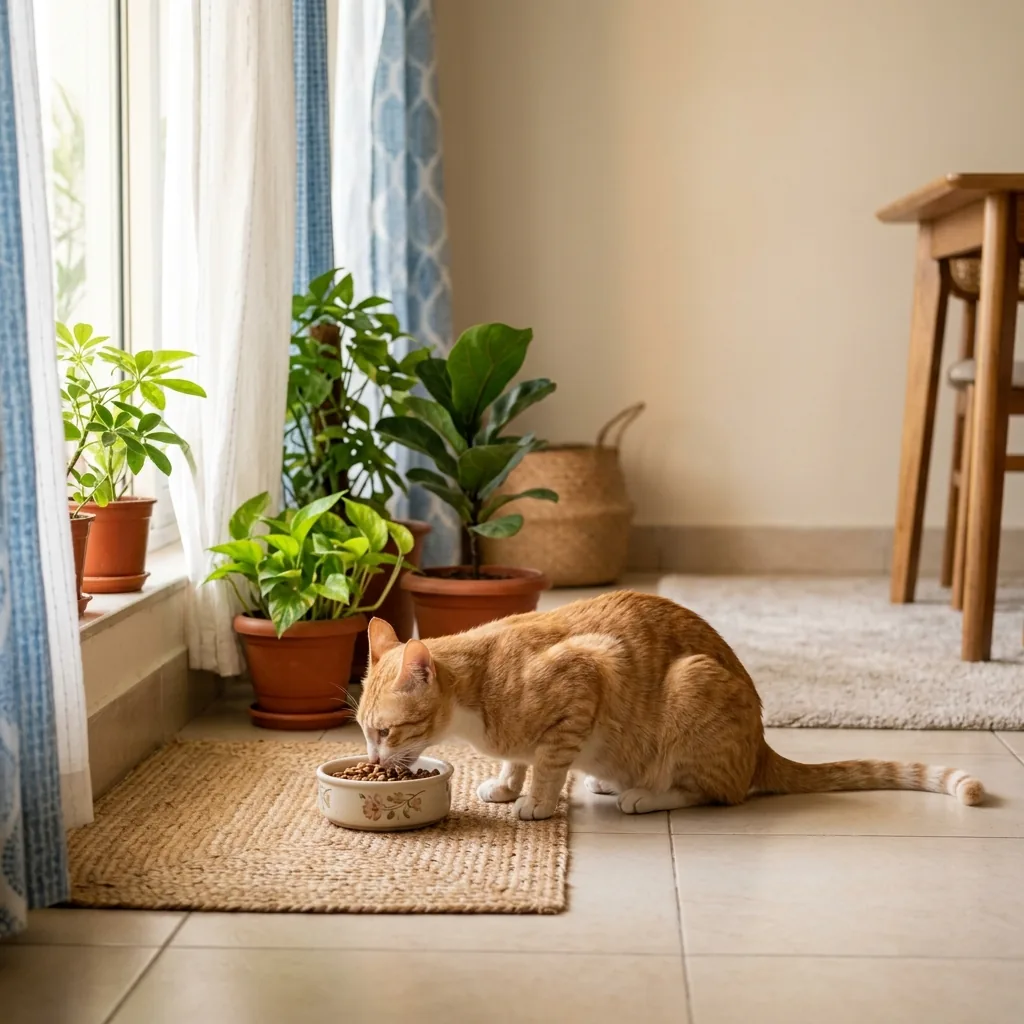
Leaving a bowl brim-full of dry kibble before heading out for work feels convenient, but is it actually what your cat needs? When considering free feeding vs meal feeding, many cat parents in India wonder if leaving food out all day creates a happy grazer or just a sleepy, overweight feline. Cats are natural hunters built for small, frequent snacks, but modern apartment living presents real challenges like humidity, ants, and indoor boredom. Understanding how both feeding styles work helps you decide which routine best suits your cat's health, energy levels, and your household schedule.
What is free feeding, and when does it work?
Free feeding means leaving dry cat food out continuously so your cat can nibble whenever hunger strikes. For some cats, this mimics a natural instinct to eat multiple small meals spread across the day and night. It is low-stress for busy pet parents and can work well if your cat naturally self-regulates their appetite without overeating.
However, free feeding has distinct limitations in an Indian home environment. Free feeding only works with dry kibble. In warm or humid weather, wet food left in an open bowl spoils quickly and easily attracts ants or flies within an hour. If you have a young, active indie cat or an energetic feline who eats just enough to satisfy hunger and wanders off, leaving dry food out might feel easy. But if your cat views an open bowl as an invitation to clear every bite immediately, free feeding can quickly lead to weight gain and lethargy.
Why meal feeding is gaining popularity
Meal feeding involves serving specific, measured portions of food at fixed times during the day, usually two to four times in a twenty-four-hour cycle. Vets generally advise meal feeding for adult indoor cats because it gives you precise control over daily calories and makes it simple to feed wet food alongside dry kibble.
Serving scheduled meals also establishes a reassuring daily structure. Cats love predictable routines; knowing that breakfast appears after morning play and dinner follows your workday gives them a sense of calm confidence. Additionally, meal feeding makes health monitoring much easier. If your cat suddenly feels unwell, loses their appetite, or stops eating, a scheduled meal routine alerts you within hours, whereas free feeding can mask subtle changes in appetite for days.
So how do you choose between free feeding vs meal feeding?
Deciding which strategy fits your household depends on your cat’s age, body condition, temperament, and your personal daily routine. Many cat parents find success by weighing the specific advantages of each method.
Pros and cons of free feeding
Free feeding offers convenience for pet parents who work long hours outside the home. It eliminates begging behaviors around human mealtimes and allows timid cats to eat quietly whenever they feel safe. On the downside, free feeding makes portion control nearly impossible, increases the risk of obesity in indoor cats, and makes it hard to know who ate what in a multi-cat household.
Pros and cons of meal feeding
Meal feeding prevents overeating, supports healthy weight management, and allows you to mix high-moisture wet food into your cat's diet to support kidney and urinary health. The primary challenge is consistency: meal feeding requires a reliable schedule. If your work hours fluctuate wildly, setting strict mealtimes can take extra planning.
Simple steps to transition from free feeding to meal feeding
If you decide to switch your cat from an open bowl to structured mealtimes, abrupt changes can cause anxiety or loud vocal complaints. A smooth, step-by-step transition keeps your cat calm and digestive systems comfortable.
- Calculate daily portions: Check food package recommendations or consult your vet to find the correct total portion for your cat's age and ideal weight.
- Divide into multiple meals: Split the total daily intake into three or four small mealtimes rather than two large ones to prevent hunger between meals.
- Set a clear time limit: Put the food bowl down for twenty to thirty minutes. Once the time is up, pick up the remaining food until the next scheduled meal.
- Introduce puzzle feeders: Use slow-feed bowls or simple food puzzles for dry kibble to engage your cat's brain and slow down fast eaters.
- Keep fresh water separate: Place clean water bowls away from the feeding zone to encourage healthy drinking habits throughout the day.
- Maintain routine while away: If your schedule changes or you travel, sticking to predictable schedules through careful daily care and observation keeps your cat relaxed and eating well.
A predictable feeding routine gives your cat a sense of security while keeping their weight and energy in natural balance.
Managing weight and indoor lifestyle
Indoor cats living in apartments naturally burn fewer calories than outdoor roaming cats. When food remains in their bowl constantly, cats often eat out of pure boredom rather than genuine physical hunger. Pairing scheduled meal feeding with active play sessions creates a healthy daily cycle. Engaging your cat with a feather wand or kick toy right before a meal simulates their natural instinct to hunt, catch, and eat, leaving them content and ready for a restful nap.
If your cat is already carrying extra weight, work with your vet to create a safe, gradual weight loss plan. Never cut your cat's daily food intake drastically overnight. Severe caloric restriction in cats can lead to serious health issues, including fatty liver disease. A steady, gentle adjustment of portions combined with play is always the safest path forward.
Finding a balanced middle ground
You do not always have to choose exclusively between one system or the other. Many cat parents rely on a hybrid feeding routine that combines the best of both worlds. For instance, you might offer a measured portion of wet food in the morning and evening, complemented by a small, precisely measured allowance of dry food placed in a puzzle feeder for mid-day grazing.
Whichever method you pick, focus on consistency, accurate portion control, and keeping fresh water accessible at all times. Paying attention to your cat's energy, coat quality, and body shape will quickly tell you if their current feeding routine is hitting the sweet spot.