Cat Summer Skin Care: Sunburn, Rashes, and Coat Protection
High heat, desert coolers, and balcony sun can trigger feline skin troubles. Here is how to protect your cat from summer burns, rashes, and coat damage.
In this story · 5 parts
If you notice your cat obsessively licking their belly or scratching raw patches behind their ears as the thermometer climbs toward 44 °C, you are not imagining things. Cat summer skin care rarely gets the attention it deserves because indoor cats seem so well insulated from the elements. Yet the punishing cycle of scorching afternoons, humid desert coolers, and constant air conditioning takes a direct toll on a cat's dermatological health. From painful solar burns on pale ears to stubborn moisture rashes, hot weather introduces skin challenges that simple shade cannot solve on its own.
How does extreme summer heat upset feline skin?
Cats do not sweat across their bodies the way humans do. They release heat primarily through their paw pads and by spreading saliva across their fur through grooming, which cools them as it evaporates. When ambient temperatures soar, this natural cooling mechanism can backfire. Compulsive grooming in an attempt to cool down leaves skin repeatedly soaked in saliva enzymes, creating red, irritated hot spots and lick granulomas.
Indoor environments can also swing between extremes. In many North Indian apartments, families rely on desert coolers to survive dry summer months. While coolers bring temperatures down, they pump massive amounts of humidity into the room. If that dense moisture gets trapped against a cat's skin under a thick or matted coat, it creates a breeding ground for superficial bacterial infections and fungal issues like ringworm. Conversely, rooms sealed tight with high-blast air conditioning strip natural moisture from the air, leaving older cats and indoor indies with flaky, itchy dander.
“A cat's coat is not a winter jacket waiting to be peeled off; it is a built-in thermostat that shields delicate skin from both blistering heat and harsh sunlight.”
The white-ear hazard: Solar dermatitis on sunny balconies
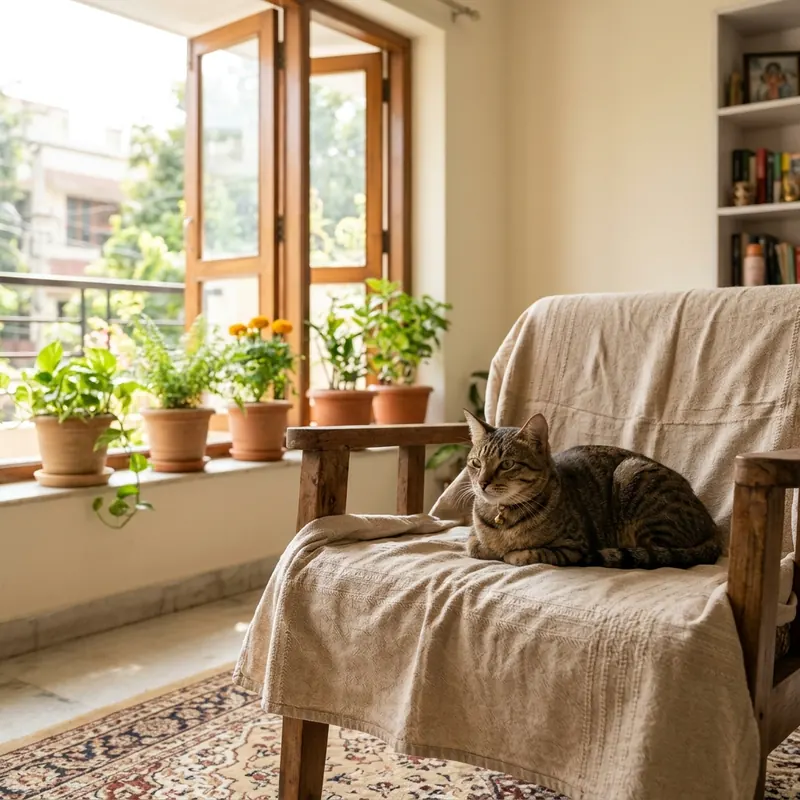
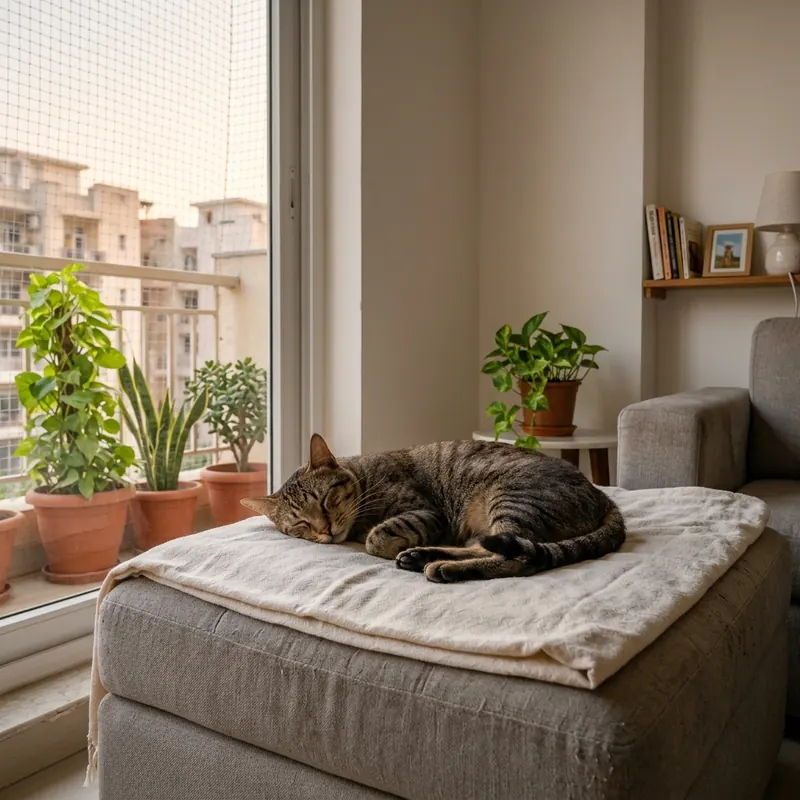
Cats love basking on a sunlit tiled floor or watching pigeons through a balcony safety net. While that afternoon sunbath seems peaceful, ultraviolet radiation poses a serious threat to cats with white fur, pale patches, or light-coloured ears and noses. Indie cats with white faces, orange tabbies with pink noses, and light Persians have minimal protective melanin on their ear tips and the bridge of their snout.
Repeated sun exposure causes solar dermatitis, commonly known as feline sunburn. It begins as faint redness and slight hair thinning along the ear margins. If unaddressed, the skin becomes crusted, scaly, and itchy, leading to chronic lesions that can eventually develop into squamous cell carcinoma, a dangerous form of skin cancer.
Never reach for human sunscreen to protect those pink ears. Most sunscreens made for people contain zinc oxide or octyl salicylate, both of which are toxic if ingested when your cat cleans their face. Ingesting these compounds can trigger severe internal distress. The safest protection is simple environmental management: limit your cat's access to sun-drenched balconies and unshaded window ledges between 11:00 AM and 4:30 PM when UV rays peak. For a safer home, keep a close eye on human medicines and pet products that are toxic to cats before applying any household ointment to your pet's skin.
Should you shave your cat to beat the heat?
When temperatures climb, it is tempting to book a salon appointment for a drastic “lion cut” shave, especially for long-haired Persians. Local grooming parlours often market shaving as an easy way to keep cats cool. In reality, shaving an indoor cat without a medical reason does more harm than good.
A cat's double coat acts as a thermal barrier. In winter it keeps cold out, but in summer it traps a layer of temperate air close to the skin, insulating your cat from external heat. Shaving strips away this natural defence. Once the fur is gone, the cat loses protection against direct UV rays, air-conditioning drafts, and mosquito bites. A bare skin surface is also far more vulnerable to scratches and chemical irritation from floor cleaners. Unless your vet specifically prescribes clipping to treat severe matting or deep-seated skin infections, keep the clippers away.
Sensible daily habits for healthy summer skin
Keeping your cat comfortable does not require complicated routines or expensive tonics. A few intentional adjustments to your daily home care can keep their skin barrier intact:
- Brush thoroughly every day: Daily combing removes dead undercoat hair that traps body heat and sweat, allowing fresh air to reach the skin without compromising the protective outer guard hairs.
- Keep cooler rooms ventilated: If you run a desert cooler, keep a window slightly cracked or an exhaust fan on so moisture does not saturate your cat's dense coat.
- Inspect high-friction zones weekly: Part the fur to inspect the armpits, groin, chin, and ear margins for redness, tiny scabs, or black crusting.
- Skip home oils on irritated patches: Pet parents often rub coconut oil — nariyal tel (नारियल तेल) — on red patches, but cats immediately lick it off, irritating the tissue further and causing loose stools.
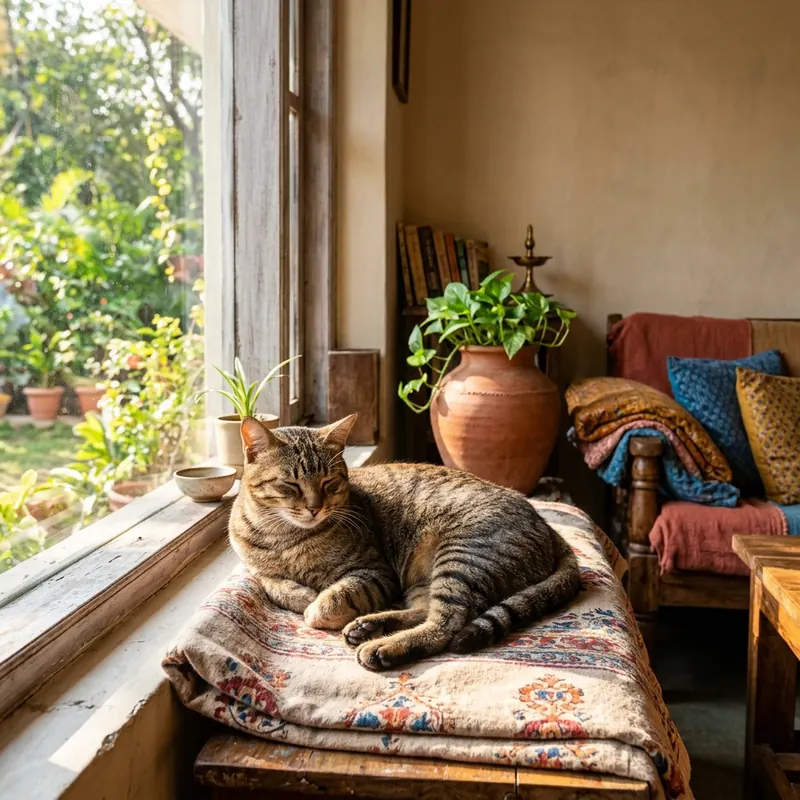
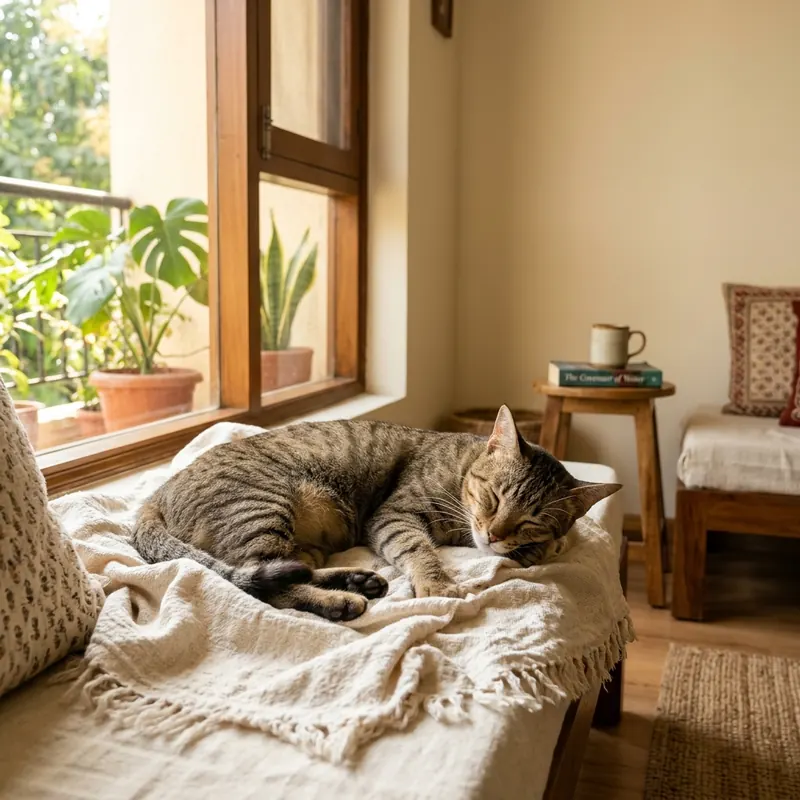
- Provide cool rest surfaces away from windows: Place cotton bedsheets or chilled floor tiles in shaded corridors so your cat can cool their belly without baking in direct window sun.
Does your cat need frequent summer baths?
Unless your cat has managed to roll in kitchen grease or your vet has prescribed a medicated wash for a fungal flare-up, healthy cats do not need frequent summer baths. Submerging your cat in water strips the natural sebum that waterproofs their skin and preserves elasticity. Stripped skin becomes dry, flaky, and prone to micro-tears from everyday scratching.
If your cat does get dusty or sticky from balcony adventures, a damp, lukewarm cotton cloth wiped gently down their back and chest is usually enough to freshen them up. When a full bath is unavoidable, use a mild, unscented feline-specific cleanser, rinse thoroughly to leave no soapy residue behind, and ensure their fur is dried completely down to the roots so lingering dampness does not invite fungal growth.
Caring for your cat's skin through the warmest months is really about gentle observation. Take a few quiet moments during your evening petting routine to run your fingers through their coat, feel for unusual bumps, and verify that their ears are cool and clear. A little daily attention keeps their skin calm and their spirits high until cooler breezes arrive.