Feather Wand Cat Technique: How to Play Like Real Prey
Is your cat bored of wand toys? Learn simple feather wand play techniques that trigger your cat's natural hunting instinct in an apartment setting.
In this story · 6 parts
You bring home a bright feather wand, wave it in front of your cat’s nose, and wait for dramatic pounces. Instead, your cat gives you a long, unblinking look, lets out a tiny sigh, and slowly walks away. If this scene plays out often in your living room, the issue usually isn't the toy itself—it comes down to your feather wand cat technique. Cats are hardwired predators, but in apartment living where birds stay safely beyond balcony netting, wand play needs to mimic real hunting to capture their focus.
Why Waving the Toy in Their Face Doesn't Work
In nature, prey rarely marches up to a cat's nose to announce itself. Mice, sparrows, and lizards run away, hide behind cover, or dart across open ground. When you push a feather wand directly towards your cat's face, it breaks the illusion. To a cat, something moving straight at them feels either confusing or slightly threatening—not like prey escaping.
Cats are triggered by movement that moves away from their field of vision or disappears behind obstacles. The moment a toy darting past a sofa cushion vanishes from sight, your cat's brain clicks into high gear: Where did it go? Can I catch it?
Four Prey Movements Every Cat Parent Should Master
To keep play exciting, vary your movements to mimic different small creatures your cat's wild ancestors hunted.
1. The Ground Skitter: Drag the feathers along the floor in short, unpredictable jerks, moving away from your cat. Stop suddenly, pause for three seconds, then dart another foot forward. This mimics a beetle or a small rodent scurrying across the tile floor.
2. The Wall Crawl: Slowly pull the feather attachment up the side of a wooden cabinet, curtain edge, or doorway frame. Stop halfway up. Many indoor cats love watching targets move vertically because it reminds them of insects climbing walls.
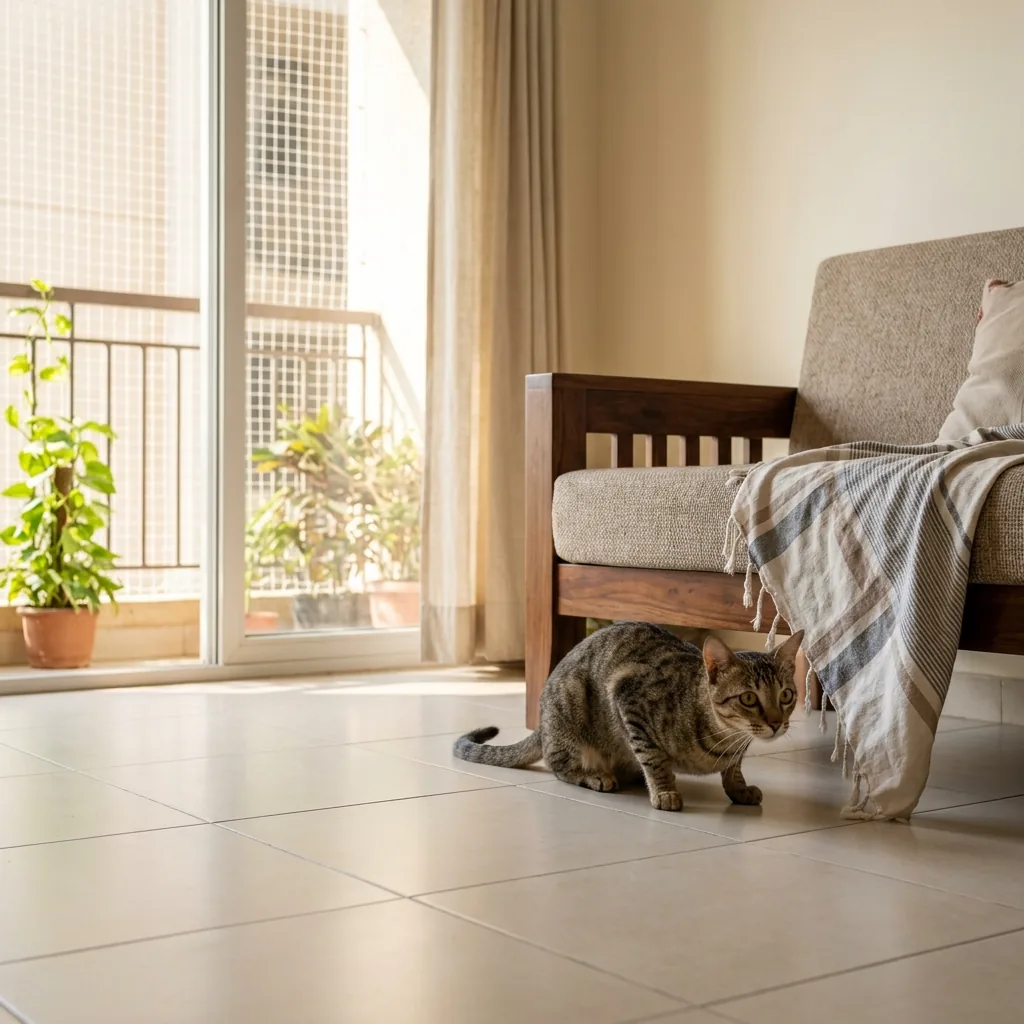
3. The Rustle and Vanish: Drag the feathers under a lightweight cotton throw, behind a cardboard box, or beneath a rug corner. Let only the tip of the feather peek out, making a faint rustling sound on the floor. This line-of-sight game builds intense focus.
4. The Low Flutter: Flutter the feather just two to three inches above the ground, making soft swooshing noises in the air, then let it fall limp on a cushion as if a small bird has landed to rest.
Real play isn't about exhausting your cat; it is about letting them feel like the master hunter of their own living room.
The Secret of the Hunt-Catch-Eat Cycle
Wild felines follow a natural sequence: hunt, stalk, catch, kill, and eat. Interactive play with a feather wand should satisfy that exact instinctual cycle. If a cat chases a toy for fifteen minutes without ever catching it, they can end up frustrated rather than satisfied.
Let your cat catch the feathers every few attempts. When they trap the toy under their paws, maintain light tension on the string for a second so it feels like live prey trying to pull away, then let the string go slack. Allow your cat to bite, bunny-kick, or carry their "trophy" across the room for a minute before starting the next round.
Golden Rules for Safe and Engaging Wand Play
- Always move the toy away: Never thrust the feathers toward your cat's face; drag or flutter them away from their line of sight.
- Use indoor obstacles: Work around sofa legs, door frames, and low tables to create natural hiding spots for the toy.
- Keep sessions short and frequent: Two 10-minute sessions daily are far better than one long, exhausting half-hour marathon.
- End with a high value treat: Complete the hunting cycle by serving a small meal or snack right after play finishes.
- Put the wand away after play: Never leave string or feather wands lying on the floor unsupervised, as cats might swallow strings or chew off small wire parts.
Setting Up Your Space for Play
In Indian homes, smooth tiled floors offer great speed for zoomies, but they can be slick when a cat makes sudden turns. Placing a woven floor mat or flat rug in your primary play area gives your cat traction to launch and land safely without slipping.
Make sure overhead fans are turned down low or off during aerial fluttering games so the string doesn't get caught, and clear away sharp edges around glass coffee tables. If you are looking for sturdy, tested wands that withstand intense pouncing, explore our selection of safe cat toys on Billu's Purrfect Picks.
Building Confidence in Shy Cats
For quieter or more cautious cats, fast movements can sometimes be intimidating. If your cat retreats under the bed or watches from a distance, don't worry. Slow your movements down. Let the feather wand stay completely still behind a chair leg, flutter it just once, and wait silently.
Even a cat who simply tracks the toy with wide eyes and twitching whiskers is actively participating in play. Over time, as their confidence grows, those slow tail twitches will turn into crouches, wiggles, and full-room pounces that make feather wand play one of the most rewarding parts of your daily routine.