Small Apartment Cat Ideas: Renter-Friendly Ways to Add Space
Living in a compact Indian flat? Here is how to create vertical territory, cosy retreats, and play zones for your cat without drilling a single wall hole.
In this story · 6 parts
- How do cats actually calculate apartment space?
- How can you turn existing furniture into a cat highway?
- What can you do with window sills and netted balconies?
- Five rental-friendly tweaks that save precious floor space
- Where should the litter box go in a compact flat?
- How do you burn energy without a long running track?
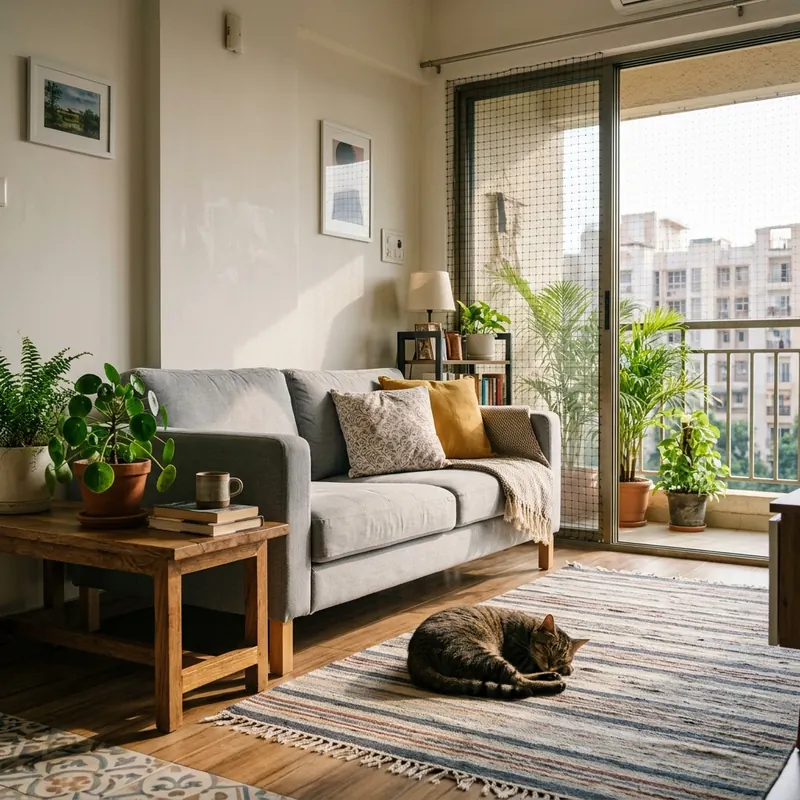
If you share a 450-square-foot 1BHK with an energetic cat, you have probably watched them pace between the sofa and the front door or launch themselves off a dining chair at midnight. It is easy to worry that a compact city flat is simply too small for a fulfilled feline life. But the most practical small apartment cat ideas do not require knocking down partition walls or forfeiting your rental security deposit. While we calculate a flat by its carpet area on the floor, cats experience their world in three dimensions, valuing height, privacy, and clear patrol routes far more than sprawling floor tiles.
How do cats actually calculate apartment space?
Cats do not think in square feet; they think in vertical volume. In the wild, a cat spends significant time off the ground—resting on tree branches, surveying open ground from rocks, and staying well out of reach of larger animals. In an Indian apartment, that instinct remains entirely intact. High vantage points offer safety and predictability, especially when unfamiliar sounds echo down the hallway, the pressure cooker whistles in the kitchen, or the doorbell rings for a delivery.
When an indoor cat is confined strictly to the floor, a small flat can quickly feel claustrophobic. Ground-level territory often forces cats into close quarters with vacuum cleaners, walking feet, and sudden domestic commotion. By opening up high routes and quiet roosts, you effectively double your flat's usable territory without moving a single internal wall.
A 450-square-foot flat feels twice as large to a cat if they can navigate from one room to another without ever touching the floor.
How can you turn existing furniture into a cat highway?
You probably already own the best climbing frames in your home: your wardrobes, bookshelves, and storage cabinets. In many Indian apartments, tall wooden wardrobes or steel Godrej almirahs reach nearly to the ceiling, leaving a foot or two of open air above them. That dead space is prime feline real estate.
Instead of stacking dusty suitcases on top of the wardrobe, clear a neat section and lay down a non-slip cotton mat or an old handloom dhurrie scrap so paws do not skid on smooth laminate. Then, build a stepping-stone path to get there. A sturdy study chair can lead to a low chest of drawers, which leads to a waist-high bookshelf, giving your cat an easy, hop-by-hop staircase to their aerial penthouse. This creates a secure observation post where your cat can sleep deeply, undisturbed by daily household foot traffic.
What can you do with window sills and netted balconies?
A window overlooking a busy street or a garden tree functions as feline television, providing hours of low-stress mental stimulation. Watching fluttery sparrows, swaying branches, and passing street dogs burns mental energy and prevents indoor boredom far better than floor space ever could.
Before making a window or balcony accessible, ensure safety netting is firmly in place. High-rise falls are a real and heartbreaking veterinary emergency across Indian apartment blocks. Strong, professionally installed nylon netting across balconies and openable windows keeps your cat completely safe while letting them soak up fresh air and morning sun. Once the area is secure, place a broad wooden stool or a clamp-mounted perch by the sill. Add a small terracotta pot of fresh cat grass or pet-safe spider plants to give them a natural garden feel within a few square inches.
Five rental-friendly tweaks that save precious floor space
When you rent your flat, drilling holes for floating wall shelves is usually out of the question. Thankfully, you can build wonderful vertical paths using non-damaging solutions that pack up easily whenever you move:
- Tension-rod climbing poles: Floor-to-ceiling modular poles use strong spring tension to stay upright, giving your cat an eight-foot climbing trunk without a single wall screw.
- Slim, heavy-base scratchers: Wide, sprawling cat condos take up valuable walkway space in a narrow hall. Opt for tall, slim posts with solid, heavy wooden bases—like the sturdy vertical scratchers on Billu's Purrfect Picks—which let your cat stretch their spine fully without tipping over.
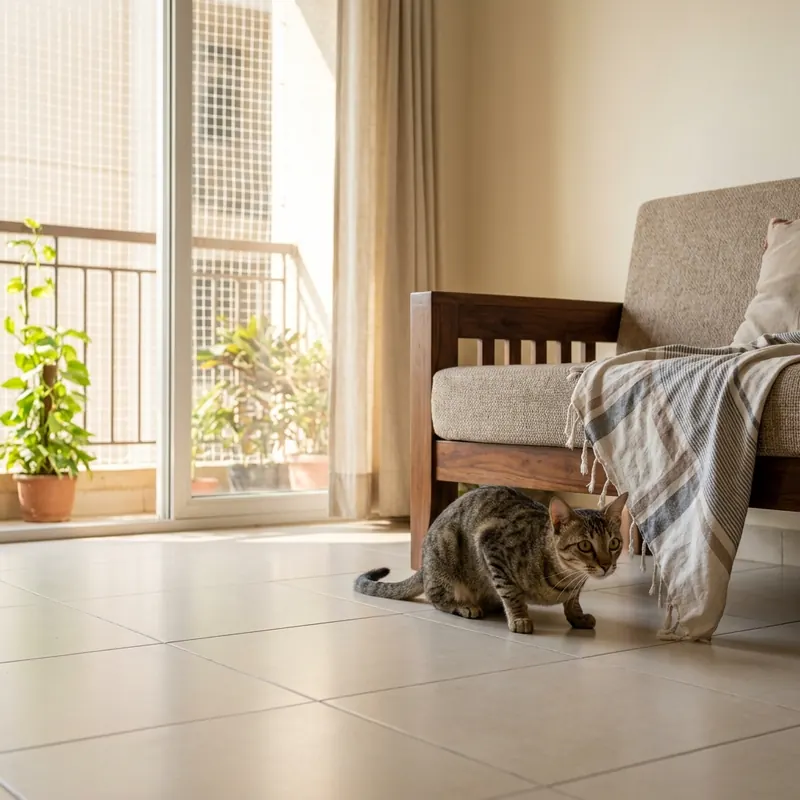
- The sofa-back runway: Pull your living room sofa just four inches away from the wall. Cats love padding along the top ridge of the cushions, and the narrow gap behind it turns into an instant secret corridor for stealthy prowling.
- Under-bed box tunnels: Keep clean cardboard delivery boxes, cut entrance holes into the sides, and tuck them beneath the bed or diwan. It creates a secluded, dark sanctuary where a shy cat can decompress during noisy family visits.
- Over-the-door climbing ladders: Fabric or wooden multi-tier ledges that hang over the top edge of a bedroom door take up zero square inches of floor area while offering multiple resting platforms.
Where should the litter box go in a compact flat?
Place the litter box in a dry, quiet, and well-ventilated spot—never inside a wet Indian bathroom. It is tempting to hide the tray next to the bathroom shower or tap, but constant humidity and water splashes turn clay litter into sticky, concrete-like sludge. Damp litter clings to paw pads, encourages bacterial growth, and discourages cats from digging comfortably.
A much better location is a dry utility balcony, an airy corner of a back passage, or the shaded floor beneath an entryway console table. In small spaces, choose a high-sided litter box to contain stray granules, and place a ridged rubber mat underneath to catch tracked particles. Scooping the box twice every day keeps your home fresh; in tight apartments, consistent hygiene does far more for air quality than any perfumed spray, which can irritate sensitive feline airways.
How do you burn energy without a long running track?
Sudden bursts of evening zoomies often happen because an indoor cat has pent-up predatory energy and nowhere long enough to run. You do not need a twenty-foot straight corridor to satisfy a hunting drive; you just need to direct that energy vertically and mentally.
Spend ten to fifteen minutes before dinner playing with an interactive wand toy. Make the feather lure flutter up the side of a scratching post, pause on the sofa cushion, and hide behind a cushion. Jumping and climbing tire a cat out much faster than horizontal sprinting. Follow the play session with their evening meal or a puzzle feeder—even dry food hidden inside an empty egg carton or a cardboard toilet paper roll—so they can hunt, eat, groom, and settle into a deep, peaceful sleep.
Your cat does not dream of a vast empty villa; what they truly crave is territory they can claim, height they can survey, and quiet spaces where they feel completely secure. With a few thoughtful shifts in how you use your vertical space, even the cosiest city apartment can become a rich, joyful kingdom for your companion.