Apartment Cat Budget in India: Where to Spend and Where to Save
Planning an apartment cat budget in India? Discover where to spend on safety and nutrition, where to cut costs wisely, and how to avoid costly surprises.
In this story · 5 parts
Bringing a cat into a high-rise flat brings quiet warmth to city living, but planning an apartment cat budget in India can feel bewildering when pet aisles try to sell you endless shiny accessories. Between automated litter trays, imported grass kits, and expensive designer beds, it is easy to spend heavily on gadgets your cat will gladly ignore in favour of a plain brown delivery box. Building a practical feline budget does not mean cutting vital corners. Instead, it means separating genuine wellbeing from commercial fluff, ensuring your companion stays healthy without straining your monthly finances.
What are the essential one-time setup costs for an indoor flat?
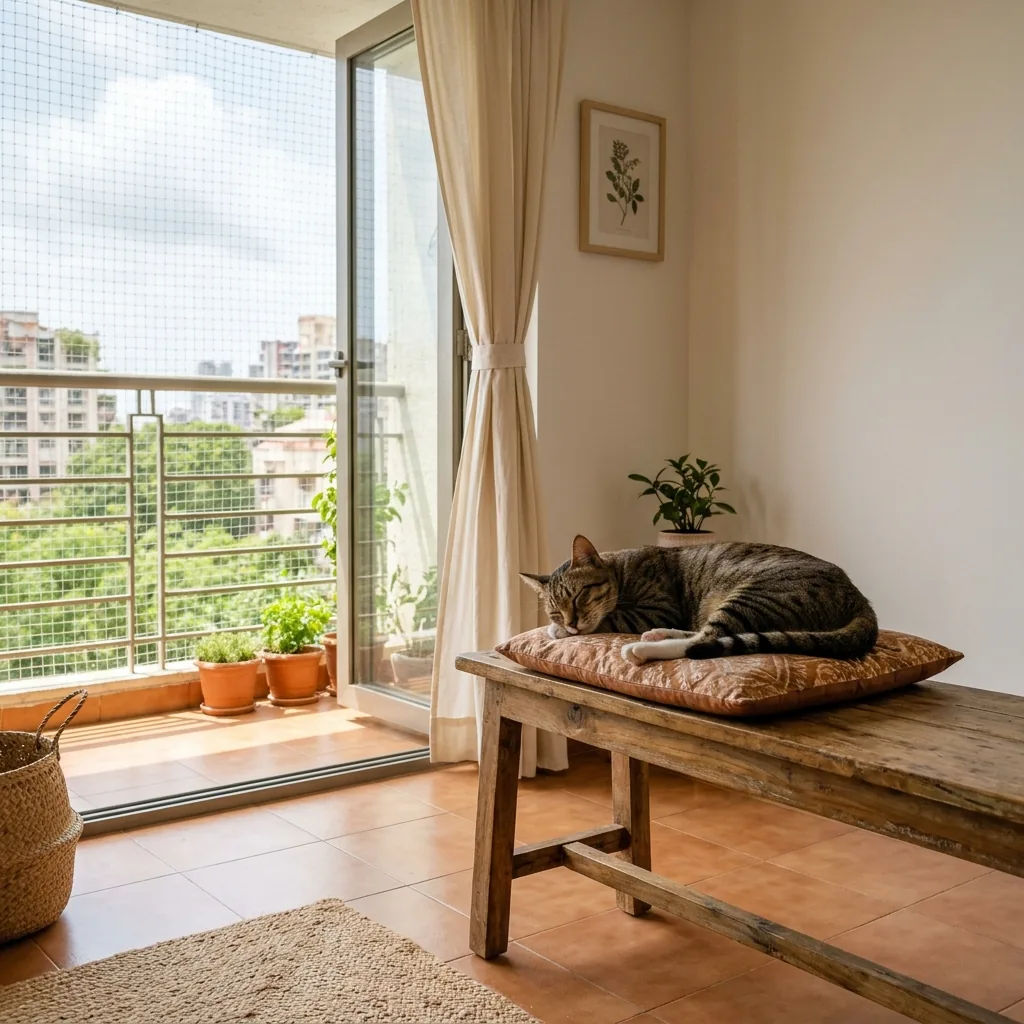
Before your cat even steps across the threshold, a few structural investments protect both your cat and your tenancy deposit. The most critical one-time expense in an Indian high-rise is pigeon and balcony safety netting. Cats possess an intense prey drive; a fluttering pigeon on a tenth-floor parapet can tempt even the calmest cat to take a dangerous leap. Sturdy nylon or wire-reinforced netting on balconies and openable windows is an absolute non-negotiable.
Next comes scratching infrastructure and waste management. In an apartment, if you do not provide dedicated scratching spots, your sofa corner or rental wooden door frames will take the hit. A tall scratching post wrapped in rough rope saves far more money than it costs. For litter, skip fancy electronic boxes with motors that break down; a simple, deep plastic storage pan gives your cat ample space to turn around without kicking litter across your tiled floors. Add a sturdy travel carrier—essential for vet runs and flat moves—and a couple of wide stainless steel or ceramic food bowls, and your flat is safely prepared.
How should you allocate everyday food and litter?
Food and litter represent your primary recurring monthly expenses. While it can be tempting to buy the cheapest grain-heavy dry kibble off supermarket shelves, low-grade food is a false economy. Cheap kibble packed with fillers and plant proteins can contribute to urinary tract issues and obesity, especially for indoor cats who get less natural exercise. Treating an acute urinary blockage at an emergency clinic can quickly erase years of supposed food savings.
Focus your everyday budget on moisture-rich animal proteins. Combining quality commercial wet food with clean, boiled deboned chicken (cooked plain without salt, onion, or garlic) keeps your cat hydrated and lean. For litter, standard clumping bentonite clay or natural plant-based litters tend to be the most economical over time because you only scoop out the soiled clumps rather than dumping the entire tray every few days.
Where does preventive veterinary care fit into the plan?
Medical expenses tend to shock apartment dwellers only when they are left out of the regular financial plan. Cats need consistent preventive health care, which costs a fraction of emergency interventions. This routine includes core vaccinations—such as the feline tricat vaccine and anti-rabies jabs—along with periodic internal deworming and topical flea prevention during hot, humid spells.
Neutering or spaying is another vital health cost. Beyond preventing unwanted litters, sterilising an indoor cat prevents territorial urine spraying inside your apartment, curbs late-night distress yowling, and eliminates the risk of life-threatening uterine infections or testicular issues later in life. Ask your vet for an estimate for sterilisation and annual wellness screenings, as fees differ widely between private neighbourhood clinics and government veterinary polyclinics. Prioritising timely feline vaccinations and preventive vet visits protects your cat's baseline vitality while keeping your overall medical spending predictable and modest.
Where can you safely save money in an Indian home?
You do not need to purchase expensive pet accessories to give your cat an enriched, happy indoor life. In fact, many of the best feline enrichment tools already exist right inside your flat:
- Skip designer cat beds: Cats naturally prefer to sleep in warm, elevated, or secluded corners. A soft, clean cotton bedsheet or an old dupatta folded neatly inside a clean delivery carton will almost always win over an expensive fleece pod.
- Craft simple foraging toys: Rather than buying battery-operated plastic toys, turn toilet paper cardboard rolls, folded paper balls, and clean plastic bottle caps into interactive chasing games.
- Grow your own wheatgrass: Skip costly commercial cat grass tubs. Buy a handful of whole wheat grains — gehun (गेहूं) — soak them overnight, and sprout them in a shallow mud saucer for a safe, digestive-friendly greens patch.
- Purchase litter in bulk: Once you confirm that your cat tolerates a specific litter without sneezing or stepping out of the box, buy the largest available bag to lower the cost per kilogram.
- Make DIY scratching surfaces: If ready-made cat trees feel prohibitively priced, wrap untreated natural jute or sisal rope tightly around an existing study table leg or a solid wooden plank.
Why is an emergency health buffer essential?
Even the most sheltered apartment cat can develop sudden health troubles—from swallowing a stray sewing thread off the rug to suffering from sudden pancreatitis. Cats are notoriously stoic animals; by the time they show obvious symptoms like hiding under the bed or refusing food, the underlying illness is often quite advanced.
Setting aside a dedicated, rolling emergency cushion in a separate savings account ensures you never have to hesitate or make critical medical decisions based purely on your bank balance. Even a modest sum transferred automatically each month builds a reassuring buffer against unexpected blood panels, ultrasound scans, or overnight hospitalisation.
The smartest way to manage a cat budget is never to skimp on quality nutrition or preventive care; avoiding a single preventable emergency saves both immense heartache and substantial expense.
Caring for a cat in an apartment does not demand luxury lifestyle spending or a bottomless wallet. It simply requires conscious choices: sturdy window nets, high-protein food, clean litter, and a steady preventive health rhythm. When you invest thoughtfully in what truly matters to your cat's health and safety, you will find that a happy, purring companion is one of the most fulfilling, manageable additions an Indian flat can hold.