Cat Dog Cohabitation in Apartment Homes: Keeping the Peace
Living with both a cat and a dog in a flat? Here is how to zone your apartment, protect feeding spots, and create safe pathways for peaceful cohabitation.
In this story · 5 parts
Can a lively dog and an observant cat genuinely share a compact Indian flat without driving each other—and you—completely mad? Successful cat dog cohabitation in apartment homes is entirely achievable, but it rarely happens by simply letting them "work it out" on the living room rug. What cats need most in tight quarters is predictable territory, high vantage points, and the ironclad guarantee that their resources cannot be hijacked by an inquisitive wet nose. With thoughtful room zoning and quiet patience, two very different animals can comfortably share your home in companionable peace.
Why vertical territory changes everything in a flat
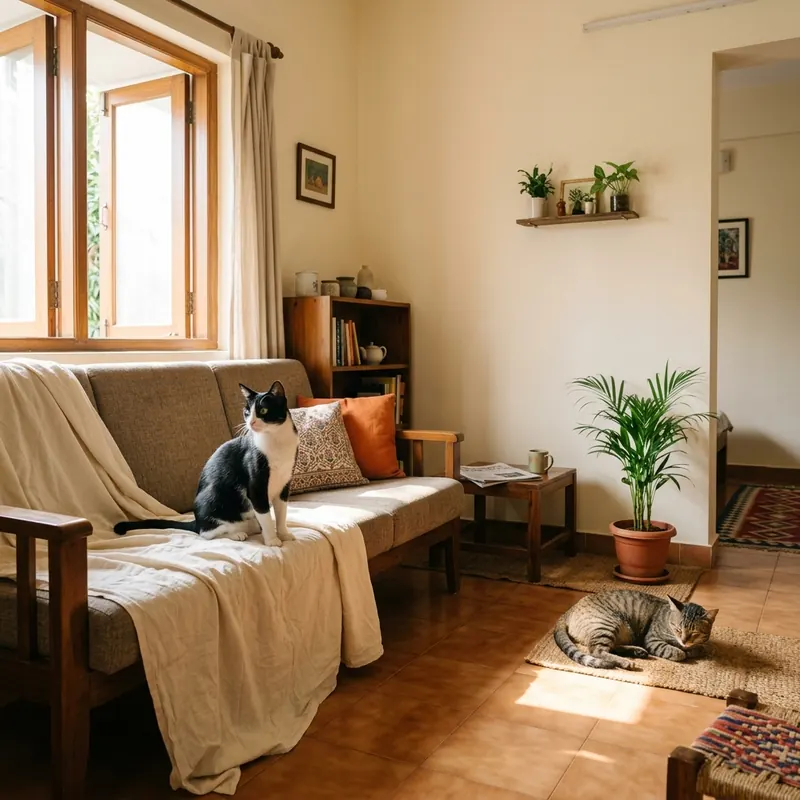
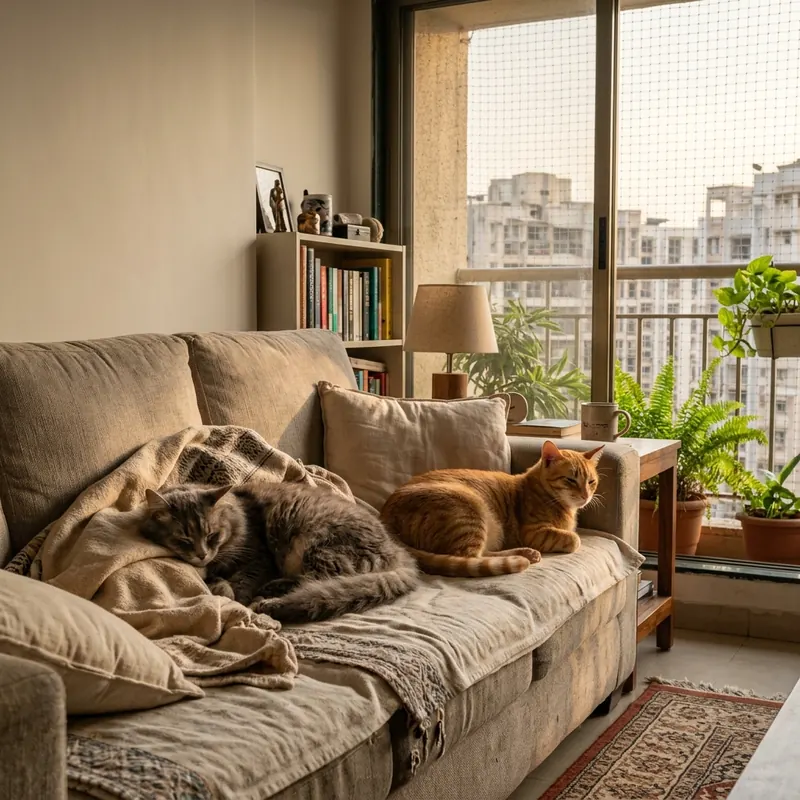
In an apartment, floor space is strictly limited. If your cat has to navigate from the bedroom to the litter box along the exact same narrow corridor your dog bounds through, tension builds quickly. Dogs live horizontally; cats live three-dimensionally. When a cat has aerial pathways—sturdy bookshelves, the top of a wardrobe, a wide window sill with pigeon netting, or wall-mounted cat perches—their entire outlook shifts from anxious defense to quiet confidence.
A cat with an elevated escape route feels curious and secure; a cat cornered on the living room floor feels like prey.
Give your cat unbroken pathways where they can travel across a room without touching the floor. If a bouncy young indie pup suddenly charges down the passage with a squeaky toy, your cat can simply hop onto a side table, step onto the back of the sofa, and look down with calm detachment rather than sprinting into a corner in blind panic.
The three resources you must physically separate
When cats and dogs squabble in tight quarters, the dispute is almost always about three essential resources: food bowls, the litter tray, and quiet resting spots. Dogs are scavengers who find pungent cat food irresistible—and to a cat, being startled or crowded while eating or using the toilet is deeply stressful.
Cats prefer to graze or take their time with meals, whereas most dogs will finish whatever is in sight in thirty seconds flat. Feed your cat high up on a kitchen counter or sturdy sideboard where the dog cannot reach. If you feed on the floor, place the cat's bowl in a room closed off with a temporary pet gate or an adjustable door strap that only opens wide enough for the cat to slip through.
The litter box requires even stricter protection. Many dogs will enthusiastically raid a litter tray if left unchecked. This spreads bacteria, upsets the dog's stomach, and can terrify the cat so much that they refuse to use the box altogether, opting for your sofa or bed instead. Place the litter tray in an attached bathroom or utility balcony fitted with a baby gate or a wire mesh door (जाली, jaali) propped open with a cat-sized gap.
Five rules for peaceful introductions in close quarters
Rushing an introduction inside a small flat is the quickest way to create long-term anxiety. Taking slow, controlled steps allows both pets to adjust without panic.
- Start with scent swaps behind closed doors: Keep the newcomers in separate rooms for the first few days, swapping their sleeping blankets and grooming brushes so each learns the other's scent without visual threat.
- Feed on opposite sides of a solid door: Place their food bowls near the base of the closed door so both animals learn to associate the muffled sounds and smell of the other with a positive mealtime experience.
- Allow visual contact through a secure barrier: Use a sturdy mesh gate or crack the door open a few inches with a firm door stopper, rewarding quiet curiosity with calm praise and small treats.
- Keep the dog on a short leash indoors: For their first room-sharing sessions, keep your dog leashed and seated beside you. Reward your dog instantly for ignoring the cat and looking back at you.
- Never force physical proximity: Never hold your cat in your arms to "show" them the dog. If the cat feels restrained and frightened, they may scratch you or bolt, which instantly triggers the dog's natural instinct to chase.
Shared spaces and the hidden hazard of dog treatments
Living together in an apartment means cats and dogs share soft furnishings, brush against the same curtains, and often investigate each other's coats. While this closeness is sweet, it brings a critical medical danger that multi-pet Indian homes must guard against with vigilance.
Many topical spot-on flea and tick treatments formulated for dogs contain permethrin, a synthetic compound that is safe for dogs but acutely neurotoxic and lethal to cats. Even a cat grooming a dog whose neck was treated hours earlier, or sleeping curled against the treated fur, can absorb enough permethrin to trigger severe tremors and life-threatening seizures. Before treating either pet, learn about human medicines and pet products that are toxic to cats, ask your vet for cat-safe parasite preventatives for the whole household, and keep treated dogs strictly separated until the medication has dried completely.
How to read the mood before trouble starts
So how do you know if your pets are learning to coexist or merely enduring each other until someone snaps? The answer lies in their silent body language.
A dog that is fixating—standing stiff, staring without blinking, tail frozen rigid, ignoring your spoken cues—is slipping into predatory drive rather than play. Break that focus immediately by calmly stepping between them and redirecting the dog with a toy or command. A cat that feels threatened will crouch low with paws tucked tight, flick the tip of their tail in sharp, rhythmic thumps, or flatten their ears back against their head.
When things are going well, you will see loose, relaxed bodies. The dog will lie down with a soft gaze or turn their back to the cat without concern. The cat will walk past the dog with their tail pointing upright in a friendly question-mark curve, occasionally offering a slow-blink of approval. They do not need to become inseparable cuddle companions; quiet, respectful neutrality is the true mark of success.
Sharing an apartment with a cat and a dog comes down to mutual respect and good architecture. When your cat knows their aerial pathways are clear, their litter box is private, and their meals are secure, their defensiveness simply melts away.