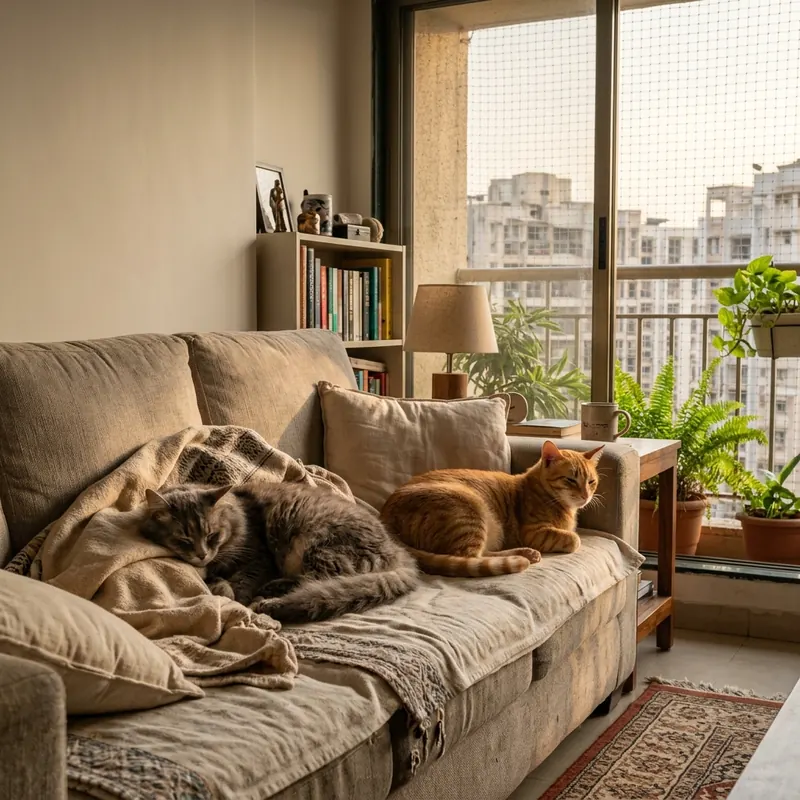
Spotting Cat Jealousy Symptoms: Is Your Resident Cat Upset?
Cats don't feel human spite, but they experience stress sharing territory. Spot the subtle signs your resident cat is feeling sidelined by a newcomer.
In this story · 4 parts
When you bring home a new kitten or adopt a second cat, you naturally expect a heartwarming scene of two whiskered companions grooming each other peacefully by the afternoon sunlight. Instead, you might notice your older resident cat staring daggers from atop the bookshelf, or suddenly swooping in whenever you reach out to stroke the newcomer. While we tend to call this human emotion "jealousy," animal behaviourists look at cat jealousy symptoms through the lens of resource anxiety and territorial control. Your cat isn't acting out of petty spite; they are simply worried that their predictable world, food bowl, and favourite human lap are suddenly up for grabs in an expanded household.
Beyond the Hiss: What Real Territorial Stress Looks Like
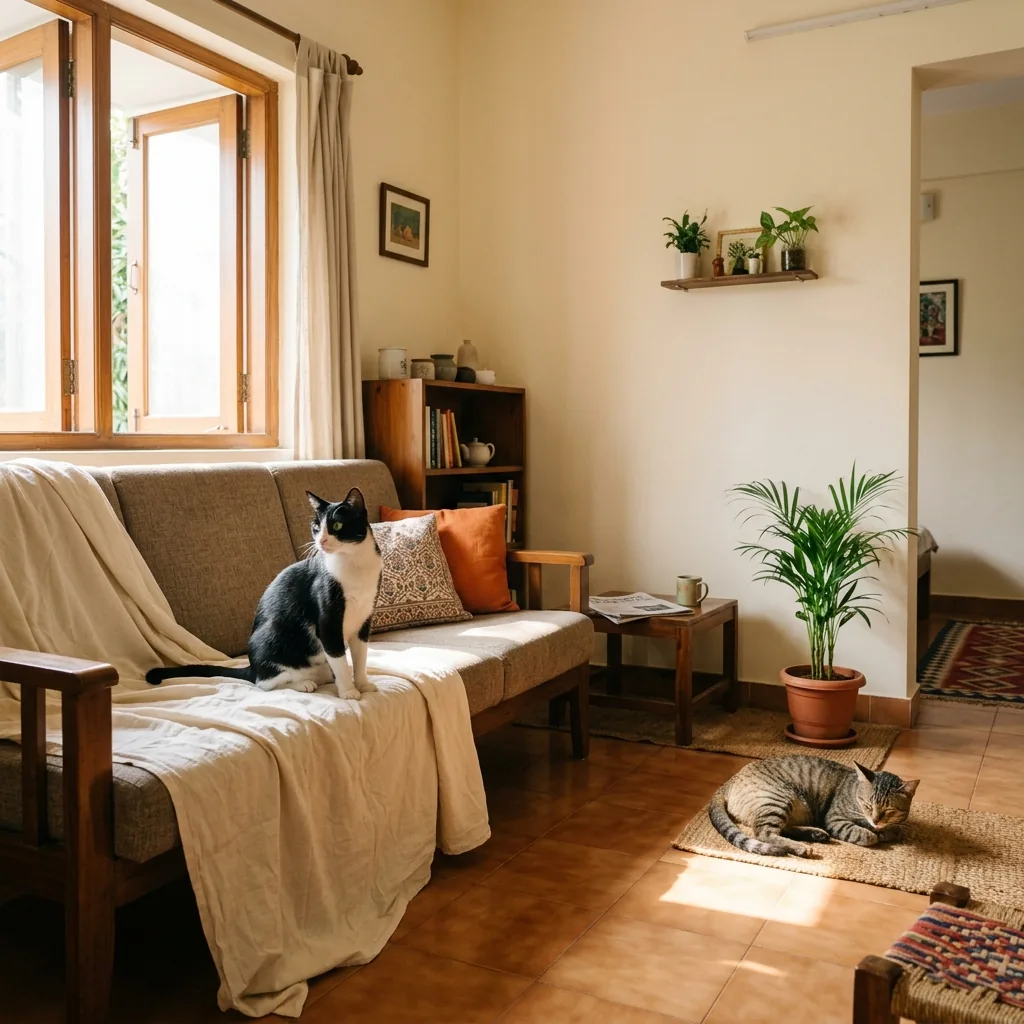
True feline distress in a multi-cat home rarely looks like a dramatic cartoon cat fight with fur flying everywhere. More often, it wears a quiet, brooding mask. A stressed resident cat might not hiss, swat, or vocalise at all. Instead, they might change their daily routine entirely—waiting until the rest of the household is completely dark and silent to eat their meals, or entirely abandoning their favourite resting spot on the living room sofa because the new arrival has claimed it as their own.
In many urban Indian homes where space in high-rise apartments can be at a premium, cats rely heavily on predictable territory. When a second cat enters the flat, the resident cat experiences a sudden disruption in their sense of spatial ownership. You might notice them sitting rigidly in doorways, blocking narrow hallways, or staring unblinkingly at the newcomer whenever they approach shared human areas. It is silent intimidation, driven by underlying insecurity.
Subtle Shifts in Affection and Behaviour
One of the most telling cat jealousy symptoms shows up right in your lap. If your cat has spent years curling up comfortably during your evening tea time, only to bolt the second the new cat walks into the room, something is amiss. Some resident cats swing to the opposite extreme: they become hyper-clingy, vocalising loudly, shadowing your every step around the house, and desperately trying to wedge themselves between you and the other cat the moment your hands reach out.
Watch out for passive-aggressive blocking behaviours. Your older cat might casually stretch out across the narrow passage leading to the litter box or kitchen, making it intimidating for the younger cat to pass safely. It is a subtle power play designed to reinforce boundaries. You might also spot sudden changes in grooming habits—either neglecting their coat or frantically over-grooming specific paws and belly patches out of sheer emotional stress.
Cats don't feel petty malice; they feel a deep, urgent need for predictability in a world where a newcomer has just rewritten the rules.
How to Restore Peace in a Multi-Cat Home
Helping your resident cat feel secure again doesn't require a total home renovation, but it does take consistency, patience, and intentional environmental management. Here are a few practical ways to lower the daily tension in your home:
- Feed separately and out of sight: Never feed cats nose-to-nose when tension is high. Give them separate rooms or distinct corners so neither feels rushed or worried about food theft.
- Respect the N+1 rule for litter boxes: Keep one litter box per cat, plus one extra, scattered across different quiet areas so one cat cannot blockade the bathroom facilities.
- Give the resident cat priority: Always greet, feed, and pet your resident cat first. Reinforce to them that their status in the household hasn't been downgraded by the newcomer.
- Create vertical highways: Use wall shelves, sturdy wardrobes, and windowsills to double your floor space so cats can pass each other without touching noses.
- Reintroduce slowly with scents: If tension is severe, reset the introduction by swapping sleeping blankets between rooms before allowing free-roaming time again.
Supporting Your Cat Through the Transition
Adjusting to a multi-cat household takes time—sometimes weeks or even months of careful observation. Patience is your greatest tool here. Never punish your resident cat for growling or expressing discomfort, as punishment only teaches them to associate the new cat with fear and scolding.
If you are ever planning a trip away and are not sure how your cat will feel around other cats during boarding, look for quiet, professional environments where every guest's emotional well-being and personal space are respected and protected.
Keep observing your cats with kindness, give them individual attention every single day, and let them set the pace for their evolving friendship.