Croton Plants and Curious Cats: Balcony Safety Guide
Those striking, glossy croton leaves brighten up Indian balconies, but what happens when your cat takes a nibble? Here is what you need to know.
In this story · 4 parts
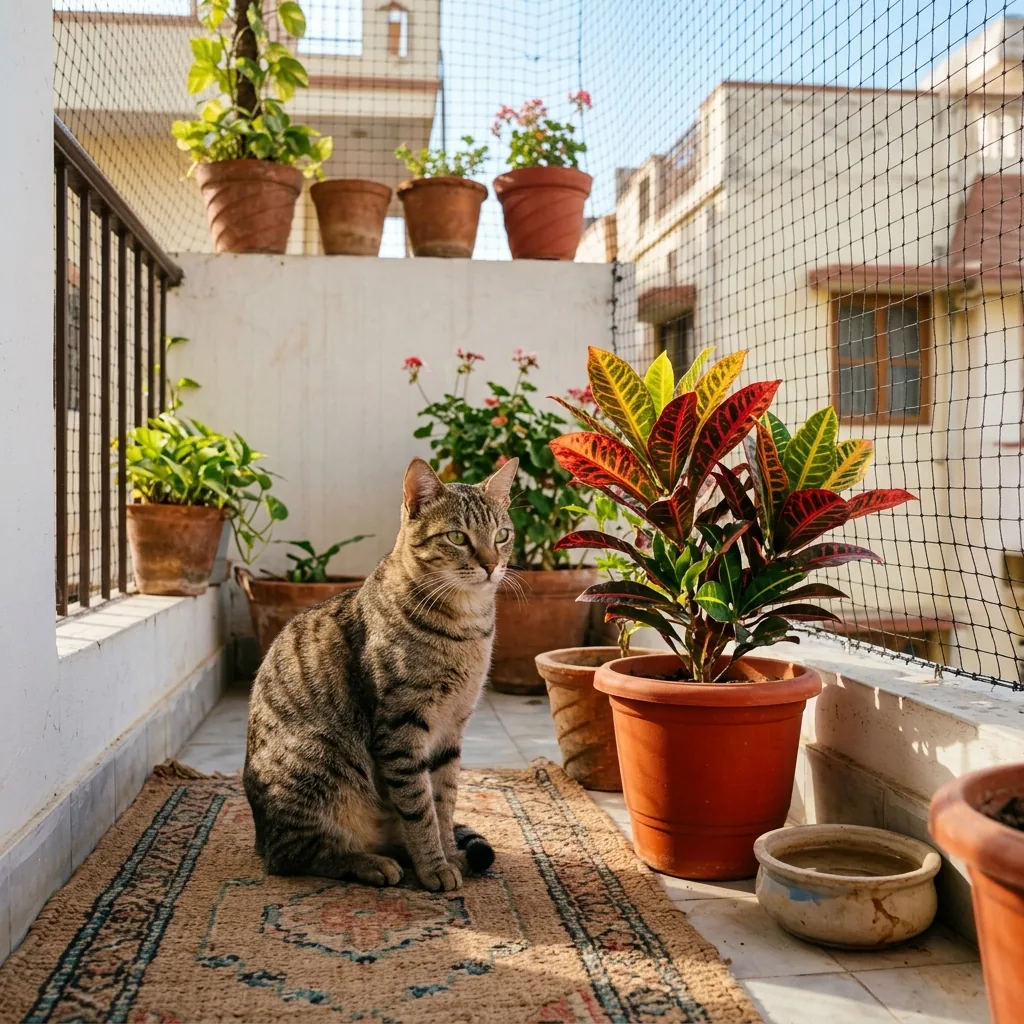
If you have ever brightened up a sunny Noida balcony with vibrant foliage, you have likely brought home a potted croton — क्रोटन (croton). With their glossy, painted leaves in striking shades of sunset orange, bright yellow and deep crimson, these hardy plants love the Indian sunshine and thrive beautifully in high-rise apartments. But if you share your living space with a curious cat, you might wonder whether those brilliant leaves pose any trouble when batted around or nibbled during a lazy afternoon nap.
Cats are natural explorers, and an upright plant with fluttering, colourful leaves can look remarkably like a living toy. In bustling cities where outdoor roaming is rare, balcony plants serve as a vital bridge to nature for indoor cats. Indie cats and pedigrees alike love a good swat at anything that moves in the breeze, especially when the afternoon sun hits the balcony tiles. While some foliage is entirely ignored, the waxy texture and crisp rustle of croton leaves (Codiaeum variegatum) often catch a cat’s eye during a sunbathing session near the sliding glass door.
What makes croton plants so tempting to our feline friends?
Felines are predators by instinct, tuned in to movement, crinkling sounds and contrasting colours. A croton standing tall in a terracotta pot acts like a sensory playground. The way the leaves catch the light or flutter when a ceiling fan or balcony breeze blows makes them irresistible to a playful kitten or an inquisitive adult cat. Unfortunately, feline curiosity does not always come without a catch. When pets decide to investigate with their teeth rather than just their paws, plant safety becomes an immediate priority for every cat parent wanting a secure home environment.
Are croton plants actually toxic to cats?
While major veterinary organisations do not place the croton among the most lethal garden hazards, animal care experts note that it still demands careful caution. According to the Pet Poison Helpline, nibbling on croton leaves can lead to mild digestive upset, including drooling, vomiting or diarrhoea. Furthermore, the milky sap inside the stem and leaves can cause significant irritation if it touches sensitive areas like a cat's skin or eyes during play or grooming.
If you want to understand the specifics of how this popular foliage affects feline health, you can read our detailed guide on croton plant safety for cats for a closer look at what symptoms to watch out for and why that sticky sap needs a careful cleanup.
So how can you keep your plants and your cat happy together?
You do not necessarily have to banish every bit of greenery from your home, especially if your balcony garden brings you joy. Managing your space smartly keeps both your urban jungle and your feline family safe and sound without turning your home into a fortress.
- Place your potted crotons on high plant stands or hanging shelves where your cat cannot reach them during a sudden leap or zoomie.
- Create a physical barrier using bird-netting or decorative wire mesh around your balcony plant corner to block unsupervised access.
- Provide safe, cat-friendly greens like wheatgrass (Triticum aestivum) indoors so your cat has a designated, appealing alternative to chew on.
- Check your pots regularly for broken stems or dripping sap, especially after watering, pruning or heavy seasonal winds.
- Wipe down floor areas near your pots to ensure no fallen leaves or sap residue are left where paws can step and groom later.
- Supervise balcony time carefully if your cat is an avid plant inspector who cannot resist a good nibble.
What should you do if your cat investigates a bit too closely?
Accidents happen even in the most secure apartments. If you catch your cat chewing on a croton leaf or notice unusual drooling, do not panic, but do not brush it off either. Gently wipe your cat's mouth with a damp cloth if there is any sap, and steer clear of outdated home remedies like giving milk or forcing home treatments. Keep fresh water nearby, and observe your cat closely over the next few hours while staying in touch with your local veterinarian if symptoms persist or worsen. Your vet will guide you on whether an examination is necessary based on how much plant matter was ingested.
A beautiful balcony garden and a happy indoor cat can share the same home, as long as every glossy leaf stays safely out of paw's reach.
Balcony gardening in high-rise flats is one of life's simple pleasures, and sharing it with a cat makes the space feel complete. A little bit of thoughtful placement ensures that your afternoon chai on the balcony remains peaceful, curious whiskers and all.