Spotting Summer Dehydration in Cats: Beyond the Water Bowl
Catching summer dehydration in cats takes more than checking an empty bowl. Learn the subtle signs of low water intake during peak Indian heat.
In this story · 5 parts
When the mercury climbs past 45 °C and the cooler hums all afternoon, we naturally reach for glass after glass of water. But for our cats, summer dehydration signs can sneak up quietly. Cats are notoriously poor drinkers by nature—descendants of desert-dwellers who get most of their moisture from prey. When you add scorching summers, frequent power cuts, and dry indoor air to the mix, a cat's daily water intake needs a close eye. Spotting when your cat is running low on fluids requires looking beyond an empty bowl to see what their body is telling you.
Why cats struggle to stay hydrated when temperatures soar
Domestic cats inherited their low thirst drive from their wild ancestors, who rarely found standing puddles in arid landscapes. Instead, they relied entirely on the moisture inside small prey. Modern indoor cats eating mostly dry kibble already live in a mild state of chronic dehydration. When summer heat arrives, that baseline shifts quickly. If your water bowls are left sitting in warm patches of sunlight or near heavy cooking zones in the kitchen, your cat will likely walk right past them.
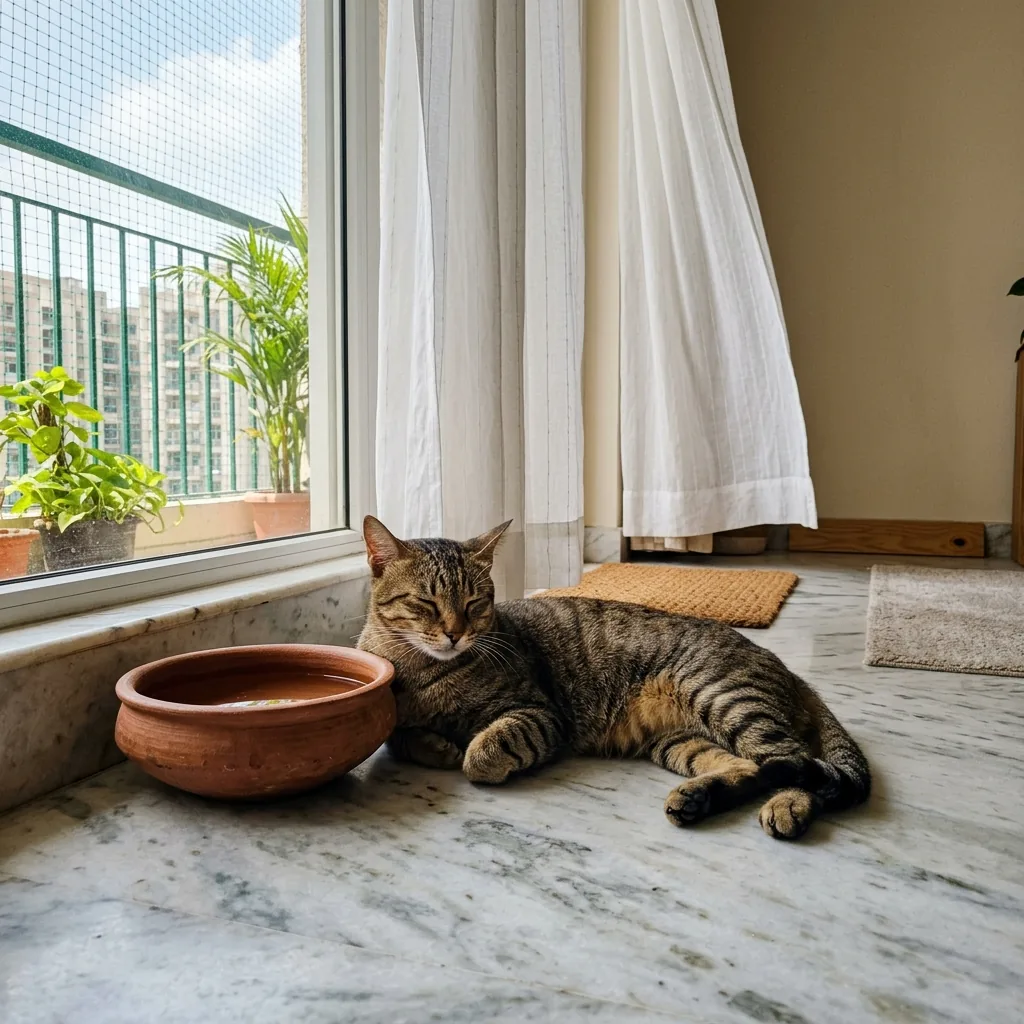
Many cat parents in India find that swapping lightweight plastic bowls for heavy earthenware vessels like a traditional matka (मटका) or wide ceramic katori (कटोरी) keeps the water noticeably cooler. Cats appreciate water that tastes fresh and sits at room temperature or slightly cool, rather than sun-warmed tap water.
The subtle signs of dehydration you might miss
Unlike dogs, who pant and drink visibly when thirsty, cats are masters at hiding discomfort. By the time a cat is visibly weak, dehydration has already progressed. You can watch for subtle shifts in their daily routine long before that happens. Check their litter box habits: are the clumps noticeably smaller, darker, or less frequent than usual? Notice how they move through the apartment. A cat who seems unusually quiet, refuses their favourite wet food, or spends hours lying flat on cool bathroom tiles without grooming might be conserving energy because their fluid levels are low.
You can also perform a gentle skin elasticity check. Gently pinch the loose skin on the back of your cat's neck and let go. In a well-hydrated cat, the skin snaps right back into place. If it lingers or slowly sinks back down, your cat needs immediate veterinary attention.
Simple ways to boost your cat's daily moisture
- Stir a spoonful of warm water or plain, unsalted meat broth into their wet food to create a tasty gravy.
- Place multiple shallow ceramic bowls across different rooms so water is always within easy paws' reach.
- Upgrade to wide, whisker-friendly plates so your cat's sensitive facial whiskers don't brush against cramped edges.
- Change the water at least twice a day to keep it fresh, free of dust, and cool.
- Consider a circulating pet water fountain if your cat shows a lifelong fascination with running taps.
Indoor cooling, power cuts, and daily monitoring
Power cuts during peak summer months can turn a comfortable apartment into a stuffy box within minutes, raising your cat's body temperature and increasing fluid loss through panting or minor sweating via paw pads. When cats board away from home, attentive daily care & observation helps catch subtle shifts in water intake before they turn into trouble.
At home, keep note of how much water you are pouring out daily. If you notice your cat ignoring the bowl entirely for over twenty-four hours, do not wait for dramatic symptoms to appear.
Cats rarely show overt thirst before they are already low on fluids; making water irresistible and accessible is always easier than treating dehydration.
When does summer thirst become a medical emergency?
Dehydration in cats can escalate rapidly into heat exhaustion or kidney stress, particularly in older cats or those with underlying health conditions. If your cat displays open-mouth breathing, extreme lethargy, dry and sticky gums, vomiting, or total refusal to swallow fluids, call your vet straight away or head to the nearest 24-hour veterinary hospital. Never attempt home remedies like force-feeding water with a syringe unless your vet explicitly guides you, and never offer milk or human rehydration salts, which can cause severe digestive upset.
Keeping a watchful eye on your cat's water bowl and offering extra moisture with every meal is the simplest way to help them coast through the hottest months with their whiskers high.