Are Cats Loyal? 10 Cat Myths Indian Homes Still Believe
Cats aren't loyal, milk is good for them, a cat crossing your path is bad luck — what studies, vets and Indian law actually say.
In this story · 6 parts
Every cat parent in India has heard them. Billi wafadar nahi hoti. Give her a bowl of doodh. Don't step out, a cat just crossed the road. Some of these sayings are harmless. Others quietly cost cats their health, their homes or a fair chance at adoption. We share our home in Noida with two cats, Toofan and Tejas, and host guest cats all year, so we hear these myths every week. Here are ten of the most common, and what the evidence actually says.
Love and loyalty: the myths that hurt cats most
Myth 1: cats aren't loyal. This one is busted. Researchers at Oregon State University borrowed a test designed for human babies: a cat spends a few minutes in an unfamiliar room with its person, a few minutes alone, then the person returns. About two in three cats greeted their person and then calmly went back to exploring, the sign of a secure bond. That is the same share seen in human infants (Vitale and colleagues, Current Biology, 2019). A cat who seems distant is often a cat who isn't sure yet, not one who doesn't care.
Myth 2: cats only love you for food. Mostly busted. When pet and shelter cats were offered food, toys, interesting smells and a person, social time with people was the top choice for most of them, ahead of food. It was a small study, but a lovely hint.
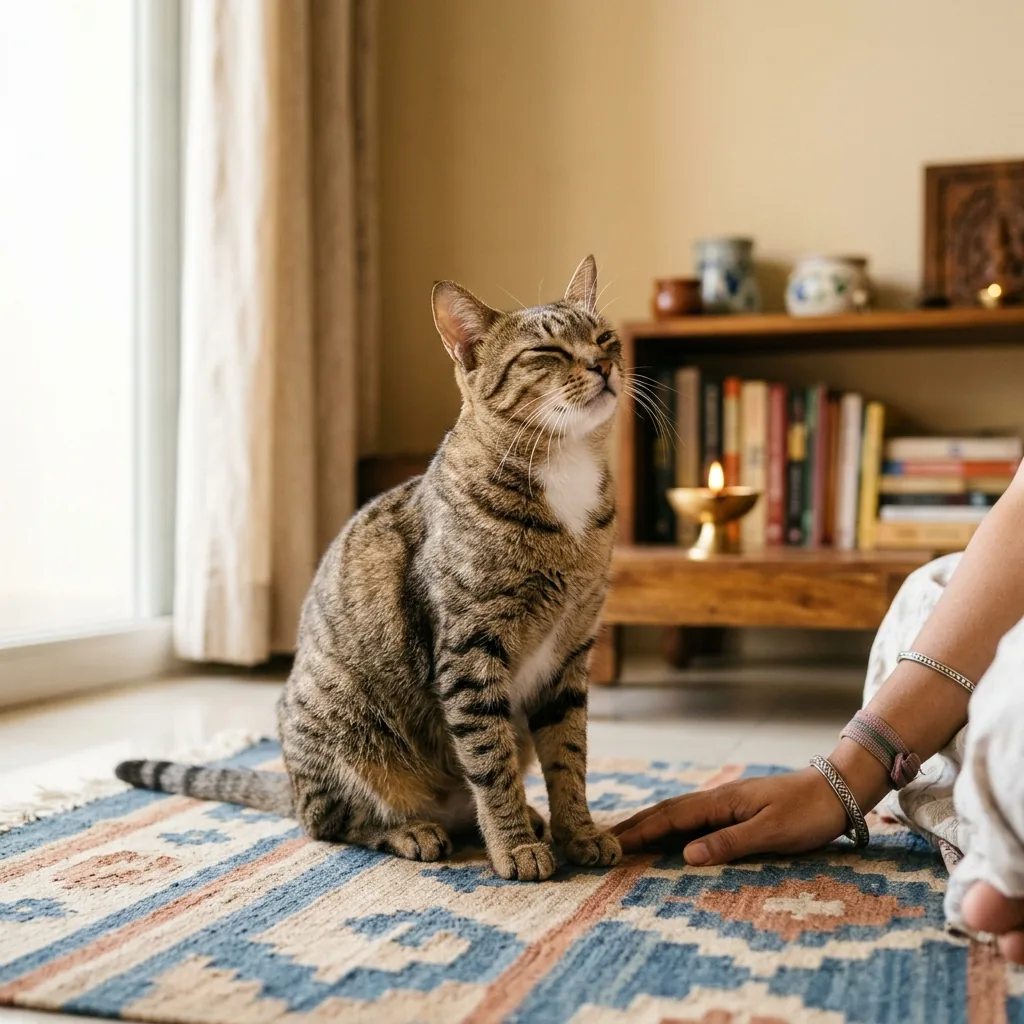
Myth 3: cats never show love back. They do, just quietly. In two experiments, cats slow-blinked back at people who slow-blinked at them and were more willing to approach a stranger who did it (Humphrey and colleagues, Scientific Reports, 2020). A tail held straight up as your cat trots over is a friendly hello. Try a slow blink tonight. Many cats blink back.
Food myths from the Indian kitchen
Myth 4: milk is the kindest thing you can give a cat. Feeding a cat is an act of love, and many families count it as punya. But most adult cats lose the enzyme that digests milk sugar after weaning, so milk often brings an upset stomach or diarrhoea (Cornell Feline Health Center). In a 2025 survey of more than 500 vets across India, most called cats lactose intolerant. Water is the drink cats need.
Myth 5: doodh-roti or a vegetarian plate is a fine meal. It fills the stomach but doesn't feed the cat. Cats are obligate carnivores and need nutrients such as taurine that come from meat. In the same survey, 88% of vets said home-cooked food alone falls short. For a street cat, a little cat food, a boiled egg or plain boiled chicken goes much further. If your home is vegetarian, a complete commercial cat food is the kind choice.
Health myths that cost cats years
Myth 6: indoor cats don't need vaccines. Busted. Feline vets recommend core vaccines for every cat, because germs travel in on shoes, clothes and visitors. Rabies is one of the core vaccines, and in India that matters: the WHO notes that dogs cause up to 99% of human rabies cases, but cats can carry it too.
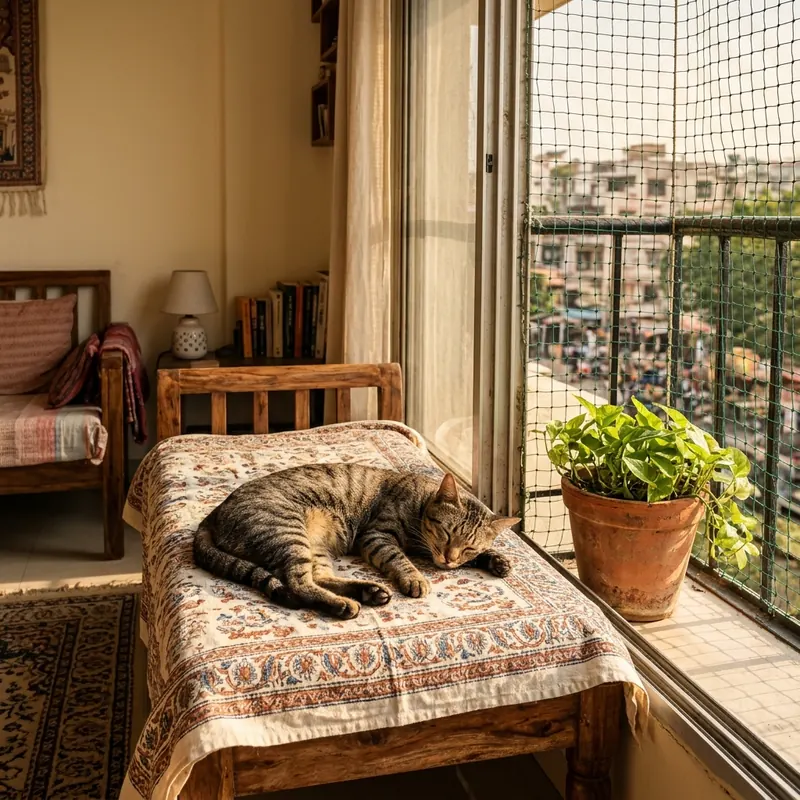
Myth 7: cats always land on their feet. Partly true, and dangerous to rely on. Cats do twist in the air, but in clinic studies most cats brought in after a high-rise fall had chest injuries, and many had broken legs. In a flat, net every balcony and window. A pigeon on the railing is reason enough to jump.
Myth 8: when you're expecting, the cat has to go. Public-health advice is to keep the cat and change who handles the litter. The CDC suggests changing the litter daily, wearing gloves for gardening, cooking meat well and washing vegetables. Talk to your gynaecologist and your vet together, and make a simple plan.
Dadi's sayings, told kindly
Myth 9: a cat crossing your path brings bad luck. Many of us grew up stopping on the road when a cat ran across. Even Hindi news explainers point out that no scripture calls it shubh or ashubh; it is a lok-manyata, a folk belief. Two popular explanations are often given: before street lights, people paused at any sound on a dark road, and in plague years a cat near the road meant rats nearby. They are plausible stories, not recorded history. The same goes for black cats. Studies find people judge black cats more harshly, partly from superstition and partly because their faces are harder to read in photos, while in Japan and Scotland a black cat is lucky.
And the cat crying outside at night? Cats in heat become very vocal, and the toms answer. Sterilisation quietens a colony far better than any remedy. India's traditions also hold cats dear: in Bengal, Shashthi, the goddess who protects children, rides a cat, and many families say a cat walking in on Diwali night means Lakshmi is arriving.
Your society, your rights
Myth 10: your housing society can ban cats, and feeding street cats is wrong. As The Week reported, Animal Welfare Board of India guidance says a residents' association cannot ban pets, dogs or cats, even by a majority vote. An AWBI advisory from April 2020 asked residents to treat animal feeders with respect, and the Animal Birth Control Rules 2023 ask RWAs to agree on feeding spots away from children's play areas. Harming a cat is a crime under the law. This is general information, not legal advice, and being a good neighbour still matters: a tidy feeding corner and a vaccinated, sterilised colony win more friends than any argument.
The short version
- Cats bond with their people; they just say it with slow blinks and a tail held high.
- Skip the milk and the roti; offer water and real cat food.
- Vaccinate indoor cats too, rabies included, and net every balcony.
- You don't need to give up your cat when you're expecting.
- A cat crossing your path is simply a cat going home.
We have collected more than thirty of these myths, each with a verdict stamp, how sure the evidence is and one kind thing to try, on Meow Talk's cat myths page. Heard one we haven't busted yet? Tell us, and we'll look into it.