Cat Affection Body Signals: How to Read Your Cat's Silent Love
Cats express love quietly. Discover the subtle cat affection body signals—from quivering tails to slow blinks—that show your cat genuinely trusts you.
In this story · 5 parts
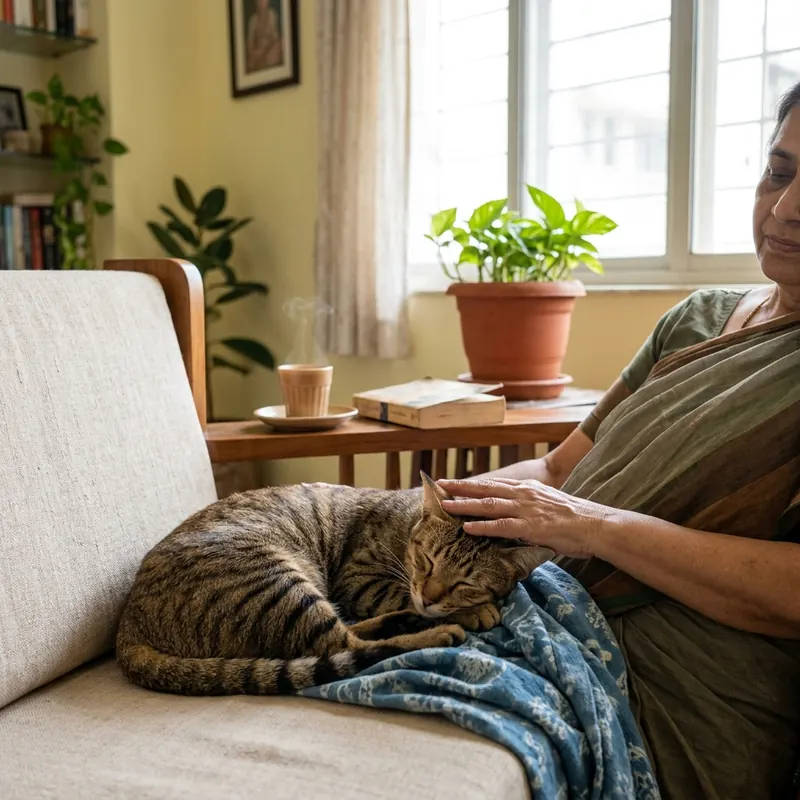
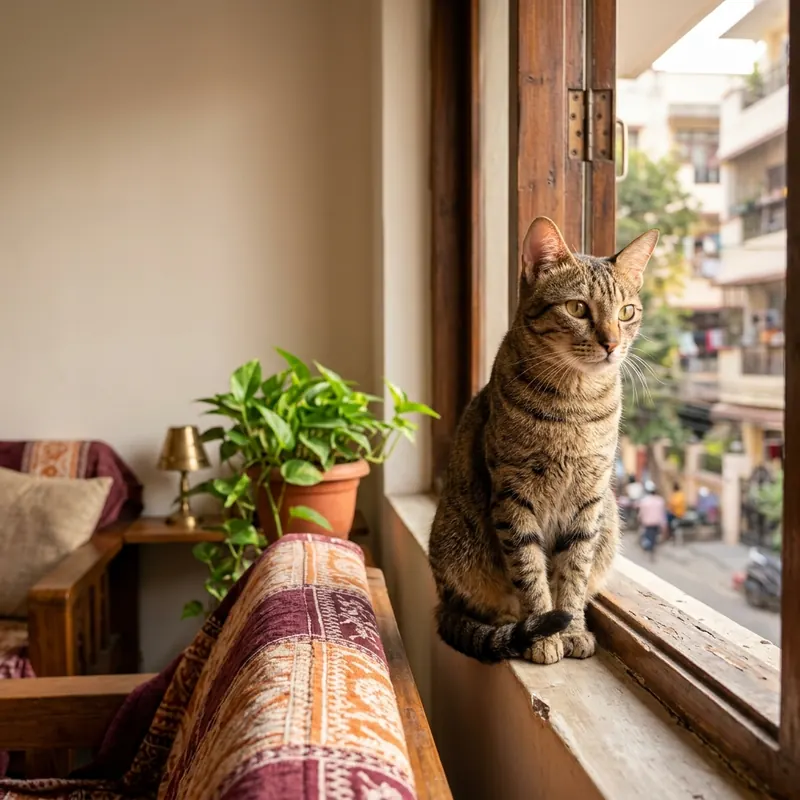
If you grew up around dogs in an Indian neighbourhood, feline affection can feel bafflingly quiet. Dogs greet you with noisy thumping tails, joyful bounds, and wet noses, while a cat might simply stroll past your shin, flick an ear, and settle onto the rug. Yet tuning into cat affection body signals is mostly about learning a softer dialect. When cats feel safe and closely bonded with you, their entire posture softens: their tails lift into vertical banners with a hooked tip, their eyes narrow into long slow blinks, and they actively claim you with delicate cheek rubs. Cats do not express devotion by putting on a performance; they show love through complete, unguarded ease.
The greeting tail: Why an upright quiver speaks volumes
Does your cat walk toward you when you step into the living room, tail held straight up like a telephone pole? That is one of the clearest signs of feline friendship. In cat language, an erect tail with a soft curve at the very top—resembling a question mark—signals a happy, confident greeting between individuals who like and trust each other.
If the base of that upright tail gives a tiny, excited quiver while they trot toward your feet, consider it the ultimate badge of honour. Unlike dogs, who wag to express a wide spectrum of excitement or arousal, a cat reserving this vertical tail-shiver for you is communicating immediate, genuine delight at seeing your face. It is a tail-up announcement that your arrival made their day better.
Scent-marking and head bunting: Claiming you as family
Have you ever leaned down to slip off your shoes, only to have your cat march up and firmly bump their forehead against your temple or push their cheek across your knuckles? Cat lovers often call this head-butting, but feline behaviourists refer to it as head bunting or allorubbing.
Cats have specialised scent glands along their cheeks, chin, temples, and the base of their ears. When your cat rubs these areas against your ankles, your desk chair, or your hand, they are depositing microscopic facial pheromones. To a cat, scent is identity and safety. By blending their unique scent with yours, they are weaving you into their shared clan perfume. It is the feline equivalent of saying, "You belong to my family, and I feel entirely safe in your presence."
The exposed belly: When deep trust meets boundaries
It happens in almost every living room: your indie tabby flops onto the cool vitrified tiles, rolls over onto their spine, stretches out their front paws, and exposes their soft, fluffy stomach. The human instinct is almost impossible to resist—reach down and stroke that tempting belly fluff. Yet within three seconds, four paws and a set of sharp teeth often clamp gently around your wrist.
Did your cat set a trap? Not intentionally.
A cat showing you their belly is offering you their highest vote of confidence, not an invitation for a tummy scratch.
In the animal world, the abdomen is the most vulnerable anatomical zone, shielding vital internal organs. When your companion exposes their belly in front of you, they are demonstrating absolute peace. They trust that you will not harm them while their defences are down. However, treating that belly like a dog's invitation for a vigorous tummy rub triggers their instinctive prey reflex. Acknowledge this gift of trust without touching the stomach; instead, stroke their forehead or chin gently.
Subtle micro-signals: How cats whisper their devotion
Cats rarely shout their feelings. More often, affection lives in subtle micro-behaviours scattered through a regular afternoon at home. Here are five quiet cat affection body signals that easy-going observers frequently miss:
- The deliberate slow blink: When your cat catches your eye, slowly closes their eyelids, and gently opens them again, they are sending feline kisses. Voluntarily blinding themselves for a few seconds in your presence shows complete relaxation.
- Sleeping with their back turned to you: If your cat hops onto your bed or sofa and curls up facing away from you, do not take it as cold indifference. They are leaving their blind spot in your hands because they believe you will keep watch.
- The elevator butt: When you stroke your cat down their back and their hindquarters lift abruptly into the air while their front stays low, they are leaning enthusiastically into your touch.
- Shadowing you from room to room: A cat who follows you from the bedroom to the balcony, then plops down two feet away without begging for food or attention, is enjoying companion presence. Just sharing space with you is their favourite pastime.
- Gentle allogrooming: If your cat licks your fingers or wrist with their sandpaper tongue, they are treating you as an equal member of their social group, grooming you just as bonded littermates groom one another.
How to return the love on their terms
Learning how to respond to these cues helps build mutual trust. Many people mistakenly think scooping up a cat for a tight, human-style hug is the best way to show affection. For most cats, restraint feels restrictive rather than comforting.
Instead, meet them at their level. Offer a loosely curled finger at nose height—a polite feline handshake—and allow them to step forward and rub their cheek against your skin if they choose. Try slow-blinking back across the room: hold their gaze softly, close your eyes for two seconds, and open them before gently looking slightly away. If you are curious about feline communication quirks and want to understand why cats behave the way they do, take a look at the feline communication guides on Meow Talk for more practical breakdowns.
Building a close relationship with a cat is a quiet, steady joy. Their affection is never forced, and it cannot be bought with mere enthusiasm. Next time your cat wanders into the room, notice the gentle curve of their tail, the slow closing of their eyes, and the quiet contentment of their presence. They are already telling you everything you need to know.