Overstimulated Cat Signs: Spotting Sensory Overload Before a Bite
Learn the subtle body language signals cats send when petting turns overwhelming, so you can stop before a swat or nip happens.
In this story · 5 parts
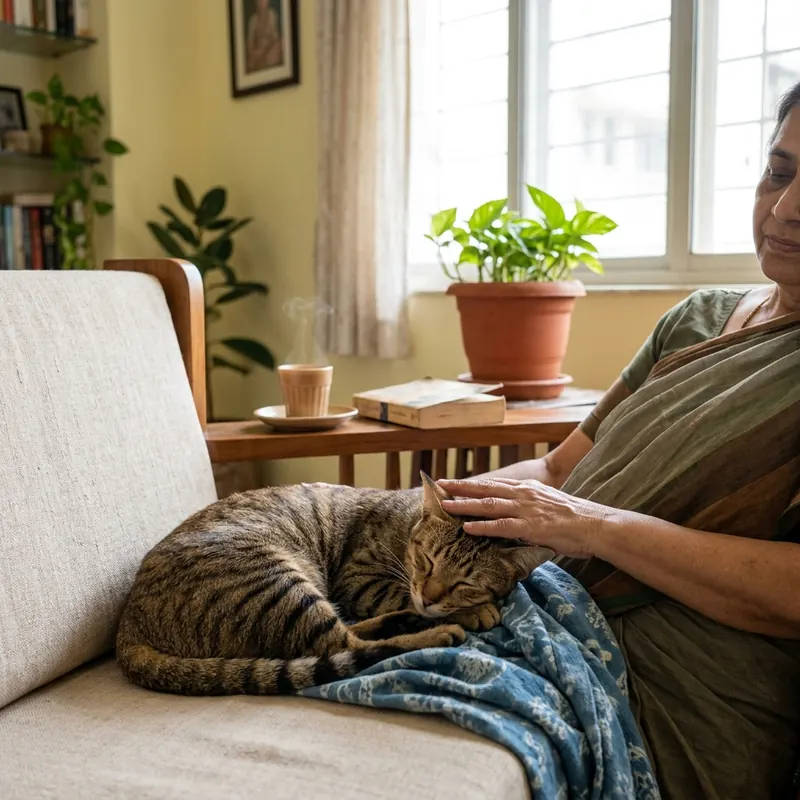
One second your cat is purring softly on your lap, and the next, a twitching tail and a quick nip on your knuckles leave you wondering what went wrong. Recognizing early overstimulated cat signs is the secret to keeping your cuddle sessions peaceful and safe. Cats experience touch and sound far more intensely than humans do, and what starts as a soothing chin scratch can quickly cross the line into physical discomfort. By watching their ears, tail, and coat, you can step back before your cat feels pushed to swat or bite.
Why do cats get overstimulated so quickly?
Cats are built with extraordinarily delicate sensory equipment. Every hair follicle on a cat's body is wired to sensitive nerve endings beneath the skin. When you pet a cat repeatedly in the same spot—especially along the spine or near the base of the tail—those nerves fire continuously. What begins as a pleasant sensation slowly builds into an uncomfortable prickly feeling, much like having someone lightly scratch the exact same spot on your arm for five minutes straight.
In feline behaviour, this reaction is known as petting-induced overstimulation. It is not spite, random moodiness, or bad behaviour. It is simply a physical boundary response. Because cats cannot speak up to ask for a break, they rely on body language. If those quiet signals go unnoticed, they use the only tools left to make the touching stop: a light swat, a warning nip, or a quick dash under the bed.
The early whisper signs: Micro-changes to watch for
Before a cat swats or nips, they almost always send a series of subtle warning signals. Learning to spot these micro-changes lets you pause the interaction while your cat is still relatively calm.
Look closely at your cat's ears first. A relaxed cat keeps their ears facing forward and loose. When sensory overload begins, one or both ears will turn slightly sideways or flatten back toward the head—often referred to as 'airplane ears'. At the same time, pay attention to their tail. A gentle, slow curve is a green light, but a tail that begins thumping against the sofa cushion, twitching at the tip, or swishing side-to-side means internal tension is building up fast.
Another classic sign is skin rippling along the back as the underlying muscle twitches. You might also notice your cat suddenly stop purring, stiffen their body posture, or turn their head rapidly toward your hand. Their pupils may dilate, giving their eyes a dark, fixed gaze. If you see any of these subtle shifts, your cat is telling you their limit has been reached.
What to do the moment you spot sensory overload
When you notice your cat showing early signs of overstimulation, your reaction determines whether the moment ends quietly or turns into a scratch. Handled gently, a pause helps your cat feel safe and understood in your home.
- Freeze your hands immediately: Stop moving your fingers and lift your hands away from your cat's body without sudden, jerky movements.
- Avoid making direct eye contact: Staring intently can feel challenging or threatening to an already tense cat. Soften your eyes or look away slightly.
- Give them a clear exit route: Do not trap your cat in your lap, under a blanket, or against a cushion. Allow them to stand up and walk away if they wish.
- Keep your voice calm and low: Avoid scolding or raising your voice. A quiet, steady tone helps de-escalate their nervous system.
- Let your cat reset on their own terms: Do not offer treats right away or pat them on the head to apologise. Give them ten to fifteen minutes of quiet space.
Respecting your cat's subtle request for space today builds the trust that makes them choose your lap again tomorrow.
How to pet an easily overstimulated cat safely
Not all cats have the same tolerance for physical affection. Many indie cats and Persians prefer short, targeted strokes rather than long, full-body pets down the back. The sweet spots for most cats are around the head and face—specifically the base of the ears, under the chin, and along the cheeks where scent glands are located.
Avoid sensitive areas like the belly, hind legs, paws, and the tail base unless your cat specifically asks for touch there. A reliable rule of thumb is the 'three-second rule': stroke your cat for three seconds, pause, and draw your hand back a few inches. If your cat leans in, rubs their cheek against your hand, or purrs, they are inviting you to continue. If they stay still, look away, or shift away, respect the pause.
If you ever feel unsure about how to read your cat's everyday signals or want to understand their unique body language, you can explore our Meow Talk guides on feline communication to help build a smoother relationship.
When overstimulation might point to underlying pain
While most overstimulation is simple sensory overload, a sudden drop in your cat's touch tolerance can sometimes signal physical pain or skin discomfort. If a cat who normally loves back scratches suddenly flinches, growls, or swats when touched along their lower back, it may not be a behavioural issue at all.
Conditions such as arthritis, flea allergy dermatitis, spinal soreness, or ear infections can make touch genuinely painful. Similarly, a neurological condition called feline hyperesthesia syndrome causes extreme skin sensitivity, violent tail swishing, and sudden frantic grooming along the spine. If your cat's sensitivity is new, intense, or accompanied by vocal distress, ask your vet to perform a thorough physical exam to rule out underlying health issues.
Learning your cat's individual body language takes time and quiet observation, but the reward is a much deeper companionship. When you catch those first subtle warning cues—the twitching tail tip, the shifted ear, the rippling coat—you create a home where your cat feels truly safe and respected.