Cat Scratching Stress Signs: Why Cats Target Doors and Windows
Is your cat scratching near front doors or windows? Discover why territorial stress triggers this behaviour and how to restore calm to your home.
In this story · 5 parts
You walk into your living room and notice fresh shred marks along the wooden frame of your main entrance, or splintered paint near the balcony sliding door. Your cat has a perfectly good sisal post standing in the corner, yet they keep returning to the doorway to dig their claws in. If you have been wondering whether this target practice is simple misbehaviour or a clear cat scratching stress sign, the answer usually lies in how your cat perceives their physical territory. When a feline feels uncertain about the safety of their boundaries, scratching becomes their fastest tool to reassure themselves by leaving both a visual banner and a scent marker.
Why do cats target entryways and windows when stressed?
Cats focus their scratching on doors, window sills, and balcony edges because these locations form the perimeter of their home territory, where outside smells, sights, and sounds collide with their indoor space.
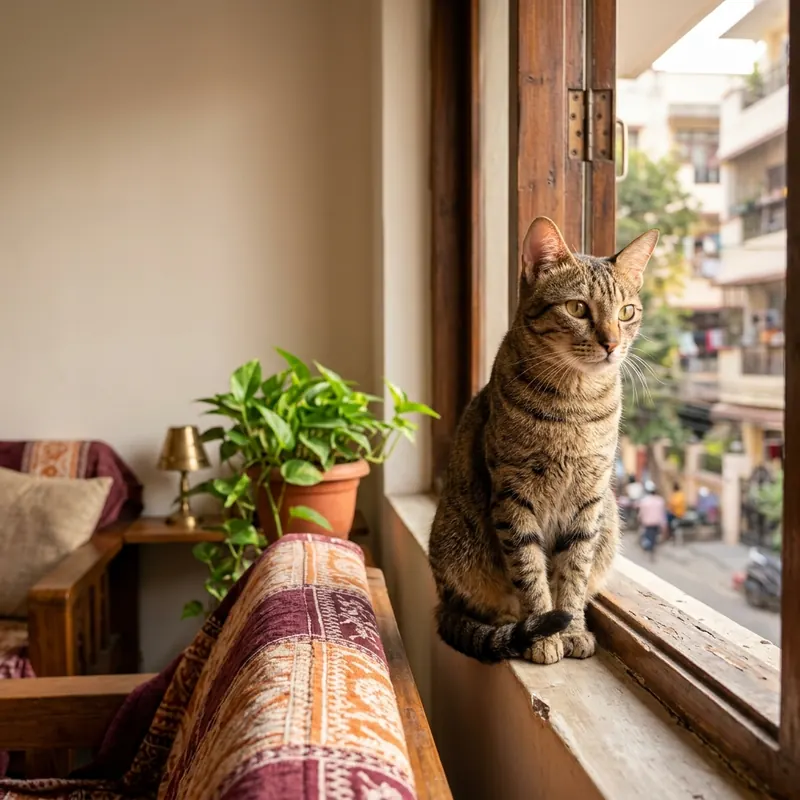
In Indian apartments and houses, the front door is a hub of unpredictable activity. House help arriving on schedule, delivery agents ringing the bell, and neighbours walking down the corridor all introduce unfamiliar scents and sudden noises. Windows and net-secured balconies offer direct views of community street cats — indie cats (देसी बिल्ली, desi billi) — roaming below or sitting on boundary walls. To an indoor cat, seeing another feline just beyond the glass can feel like an immediate territorial challenge.
When your cat scratches a surface, pads on the underside of their paws deposit chemical signals known as pheromones alongside the physical claw marks. This combination creates a comforting territorial message. When external events create anxiety, your cat scratches near the boundary to reinforce their ownership and soothe their own nerve endings. It is not done out of anger or revenge; it is an instinctual coping mechanism when their environment feels unpredictable.
How to tell if door scratching is driven by stress
Scratching for basic claw maintenance or stretching looks distinct from stress-induced marking. When routine claw care transforms into a stress response, you will notice specific shifts in where, when, and how your cat scratches.
Stress-related scratching usually happens in direct response to environmental triggers. You might see your cat sprint to the main door frame to scratch immediately after a loud knock, or watch them claw vigorously at the window frame after watching a stray cat walk past. The scratching itself often appears frantic, accompanied by a stiffened back, a low-slung tail, or wide, dilated pupils.
You may also notice that your cat avoids their regular scratching post entirely, choosing instead to target vertical surfaces that line human pathways or external view points. In some cases, boundary scratching coexists with other subtle anxiety signals, such as hyper-vigilance, sudden hiding when the doorbell rings, or changes in litter box habits.
Practical steps to lower boundary stress at home
To reduce stress-driven scratching, you need to soften the external triggers while offering your cat safe, satisfying alternatives right at the boundaries they feel compelled to mark.
- Block visual triggers along windows: Use semi-opaque window film or light sheer curtains on lower window panes so your cat cannot lock eyes with neighbourhood animals outside.
- Place heavy scratchers near boundaries: Do not move scratching posts away from the main door. Instead, position a tall, sturdy post directly beside the doorway your cat frequents so they can mark an approved object.
- Create elevated vantage points: Set up a cat tree or sturdy shelf near the centre of your living space. High perches help cats feel secure because they can observe room activity from a safe distance.
- Maintain a calm visitor routine: If your home has frequent visitors or domestic help, give your cat a quiet back bedroom equipped with water, a litter tray, and a cosy blanket before the front door opens.
- Offer rich mental engagement: Channel nervous energy into productive play using feather wands, puzzle feeders, and sturdy scratchers and cat enrichment toys that keep your cat occupied and physically satisfied.
- Keep your response neutral: Avoid shouting or spraying water when you catch your cat scratching doors. Sudden loud reactions increase overall anxiety, which often leads to more intense stress scratching later.
Creating predictable routines inside the home
Cats thrive on predictability. When their daily schedule is consistent, their baseline anxiety drops, making them far less reactive to unexpected noises outside the main door or corridor.
Scratching near entryways is rarely spite; it is your cat’s visual signpost declaring their home safe and secure.
Establish set times for morning and evening meals, followed immediately by ten to fifteen minutes of interactive play. This simple pattern — hunt, catch, eat, groom, sleep — satisfies your cat’s natural predatory cycle and releases calming hormones. When a cat feels confident in their daily rhythm and knows their core needs are met, their urge to frantically mark territory around doors and windows gradually subsides.
If your cat suddenly develops intense scratching habits alongside self-overgrooming, hair loss, skin redness, or sudden aggression, consult your veterinarian. Physical discomfort, skin allergies, or pain can heighten anxiety and lower a cat's tolerance for daily stress.
A calm path forward for you and your cat
Dealing with shredded door trim or scratched window sills can feel frustrating, but understanding the root cause shifts your perspective from punishment to problem-solving. By securing visual boundaries, offering solid scratching alternatives where your cat needs them most, and maintaining a steady daily flow, you help your feline family member feel safe in their home. With a little time and consistent support, those frantic scratches at the doorway will give way to peaceful perching and slow blinks.