Cat Cuddles and Oxytocin: What a New Kyoto Study Found
Owners who spend more time close to their cats report better moods, and cat and owner oxytocin rise together. What the study shows, and what it doesn't.
In this story · 6 parts
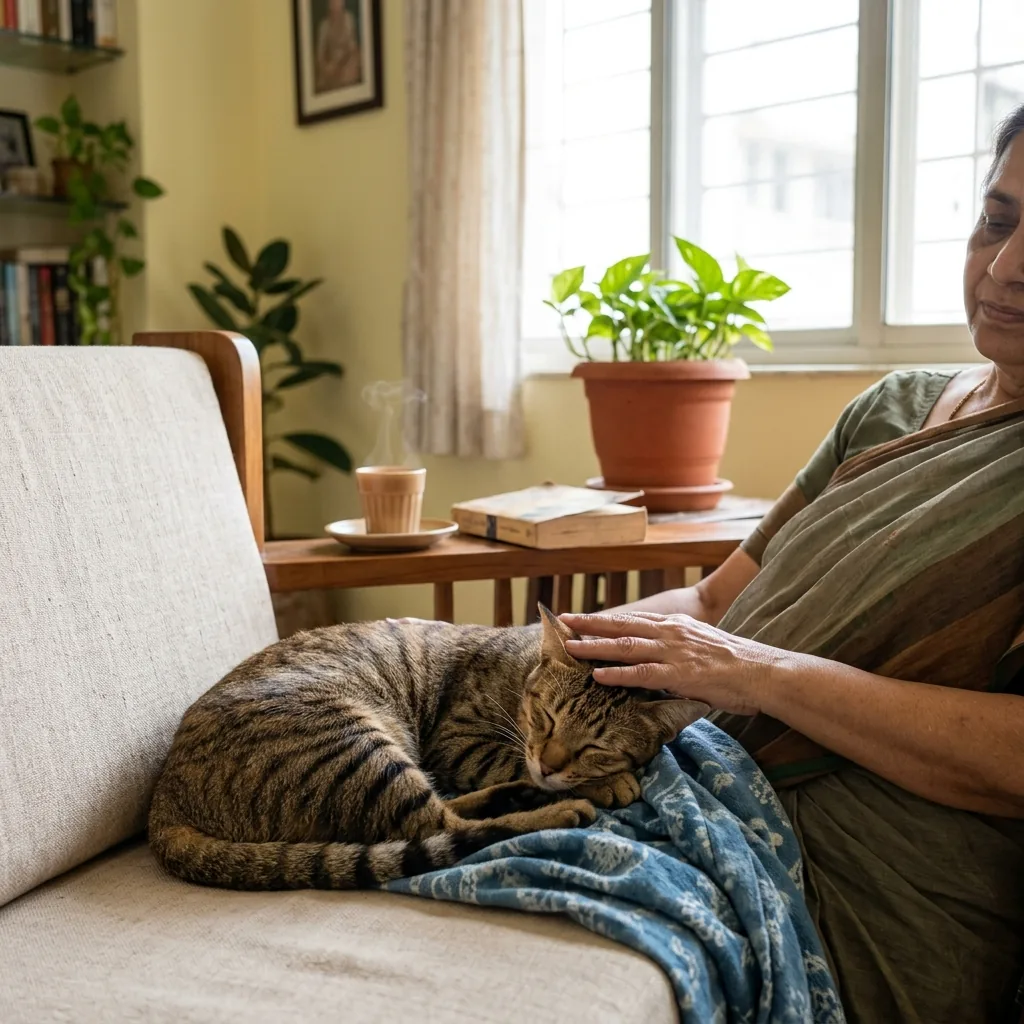
You know the feeling. Your cat steps onto your lap, turns around twice, settles, and somehow the day gets lighter. Cat parents have always said this. Now a team at Kyoto University has measured part of it, and the answer is lovely: the closer you and your cat spend your days, the better your mood tends to be, and the bonding hormone oxytocin seems to rise in both of you together.
What the researchers did
The study, published in October 2026 in the journal iScience, followed 29 cats and 19 owners in Japan through one month of ordinary life. Nothing was staged in a lab. The team asked owners to collect urine samples from themselves and from their cats, so they could measure two hormones: oxytocin, often called the bonding or love hormone, and cortisol, a stress hormone.
To know how much time each pair actually spent together, the cats wore small Bluetooth beacons on their collars that logged how close they were to their humans every day. Owners also filled in questionnaires about their moods, and the researchers watched how each cat behaved with its owner and with a stranger.
What they found
- Oxytocin moved together. Cats with higher oxytocin tended to have owners with higher oxytocin too.
- A calmer cat, a calmer human. Higher oxytocin in cats went along with lower cortisol and fewer negative feelings in their owners. In fact, the cat's oxytocin tracked the owner's low moods more closely than the owner's own oxytocin did.
- Closeness beat years. Owners' good moods were not linked to how many years they had owned their cat. They were linked most strongly to how much time they spent physically close to their cat each day.
That last point is the one we love. It suggests that a good bond is not something you earn only after ten years together. It is something you build every day, one lap, one nap and one slow blink at a time.
What the study does not say
We like honest science, so here are the limits. This was a small study: 29 cats, 19 people, one month, with volunteers who signed up through flyers and social media. It shows that these things go together; it does not prove that cuddling your cat causes the hormone changes, or that the cats cause the better moods. Happy, calm people may simply spend more time near their cats. The researchers say so themselves, and their next step is to study how cats and people influence each other day to day.
So please don't read it as a prescription. Read it as a gentle, measured hint at something most cat families already feel.
Why this matters for Indian cat homes
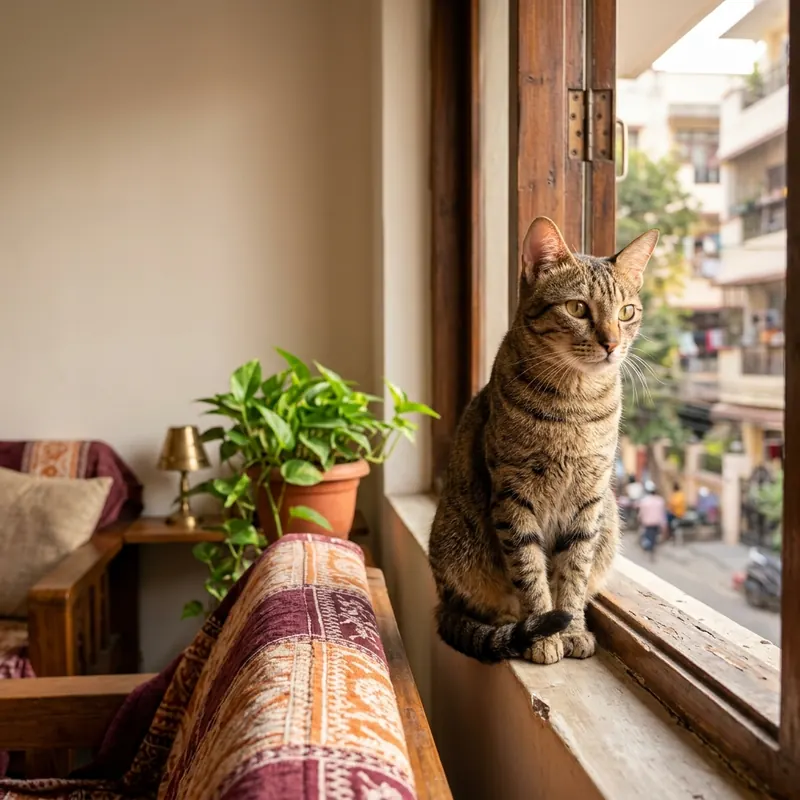
Many of us in Noida, Delhi and across India live in flats, work long hours and spend weekends on the road. Our cats, often indie tabbies rescued from the street, are indoor companions who wait for us at the door. This study is a reminder that the small moments count: the cat who sits on your laptop during a work call, the one who naps beside you while you sip your evening chai, the one who follows you from room to room.
A few easy ways to spend more close time together:
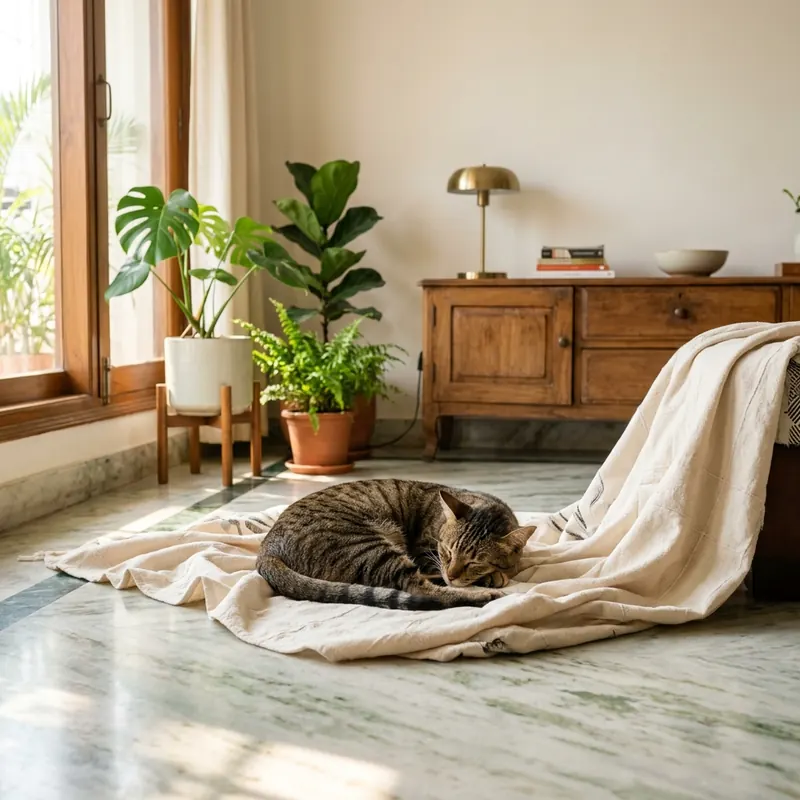
- Make a lap-friendly corner. A soft throw on the sofa or a cotton dhurrie in a sunny spot invites your cat to settle near you.
- Play before you scroll. Ten minutes with a wand toy after work is closeness your cat chooses.
- Let your cat come to you. Cats bond best on their own terms. Offer a hand, a slow blink, and wait.
- Keep routines steady. Meals and play at predictable times make cats calmer, and calm cats seek company.
What about the times you can't be close?
Travel, family functions and office trips happen. Being apart from your cat for a few days doesn't undo your bond, but the days in between matter for your cat's calm. At BilluBnB every guest gets a quiet room of its own in our home, send daily photo updates, and let shy cats settle at their own pace. If your cat is the curious type, our residents Tejas and Toofan may even become new friends; you can read more about our cat day out.
And if you need a few more reasons to love your cat, some research-backed, some cute and some delightfully strange, we collected them on one page: why you should have a cat.
The source
Takagi S. and colleagues, Kyoto University. Cats and humans show correlated affiliative physiological states. iScience, published 13 October 2026. doi:10.1016/j.isci.2026.117934. News release: Owners who spend more time close to their cats tend to have more positive moods (EurekAlert!, 16 October 2026). The study was funded by the Japan Society for the Promotion of Science and Kyoto University.