Cat Treat Calories Guide: Safe Snacking for Indoor Cats
Discover how many calories are hidden in your cat's daily treats and learn simple ways to keep your indoor cat fit without skipping snack time.
In this story · 5 parts
If you have ever caught your cat giving you those wide, expectant eyes while you open a bag of crunchies—or chop up ingredients in the kitchen—you know how hard it is to say no. A small biscuit here, a lickable tube treat after a nail trim, or a tiny cube of paneer off your plate feels harmless. But when you look closely at a cat treat calories guide, the numbers tell a very surprising story. An average indoor cat needs surprisingly few calories each day, which means even two or three extra treats can quietly double their daily snack limit.
The math of a tiny body: Why 20 calories matter so much
Most adult indoor cats in our homes—whether a sleek short-haired desi cat or a fluffy Persian—weigh somewhere between 3.5 and 5 kilograms. To maintain a healthy weight, a cat in this range typically needs only about 180 to 220 calories (kcal) per day in total energy.
Now imagine adding 30 calories worth of extra treats on top of their regular daily meals. To a human, 30 calories is a single bite of an apple. But to a four-kilogram indoor cat, 30 extra calories represent nearly 15 percent of their total daily allowance. That is the human equivalent of eating an extra slice of cheese pizza or a cream doughnut every single afternoon alongside three full meals. Over a few months in an apartment with limited room to sprint, those innocent nibbles gradually turn into soft bellies, reduced mobility, and added strain on joints.
Decoding common snacks: Commercial treats to kitchen snippets
Not all snacks pack the same caloric punch. Commercial cat treats usually come with recommended daily portions on the package, but the density varies dramatically depending on the texture and moisture content:
- Crunchy pocket treats: These typically contain 1.5 to 2.5 calories per single kibble piece. Handing out ten crunchies throughout the afternoon can easily add 20 calories to your cat's day.
- Lickable purée tubes: These wet treats usually range between 8 and 12 calories per tube. Offering a full tube in one sitting consumes half of a cat’s standard daily treat budget.
- Freeze-dried meat snacks: Pure dehydrated chicken or fish bites often contain around 2 to 4 calories per piece, offering high protein with very few filler ingredients.
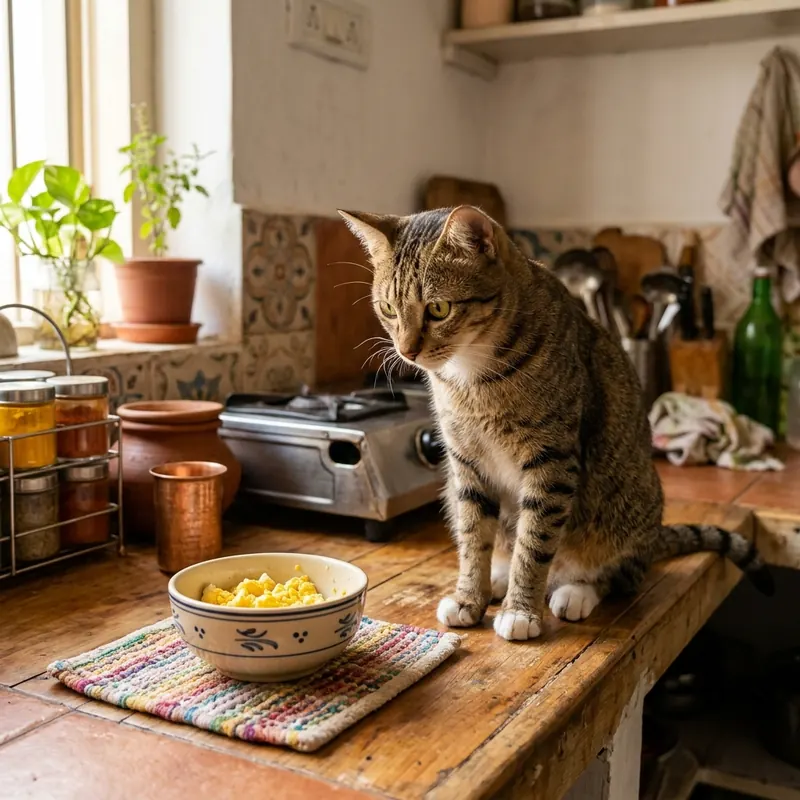
Many Indian households also love sharing small bites straight from cooking prep. A piece of plain boiled chicken breast (without salt or spices) is relatively light at around 5 to 7 calories for a small chunk. However, a single small cube of cottage cheese — paneer (पनीर) — can pack 15 to 20 calories because of its high fat density. A spoonful of plain curd (दही, dahi) is lighter, though dairy does not always agree with every feline stomach.
When offering morsels from your kitchen, always set aside a plain portion before any oil, salt, onion, or garlic enter the pan. Checking a reliable guide on unsafe foods for cats in Indian kitchens is a smart way to ensure that any snippet you share is genuinely safe and light on your cat's digestive system.
Calculating your cat's exact daily treat budget
A standard guideline recommended by veterinary nutrition organisations worldwide is the ten percent rule: treats should never account for more than 10 percent of your cat's total daily calorie intake.
If your vet recommends a 200-calorie daily budget for your cat's ideal body condition, your maximum treat allowance is exactly 20 calories per day. The remaining 180 calories must come from a complete and balanced daily cat food (wet food, kibble, or a professionally formulated diet) that provides all essential vitamins, minerals, and amino acids like taurine.
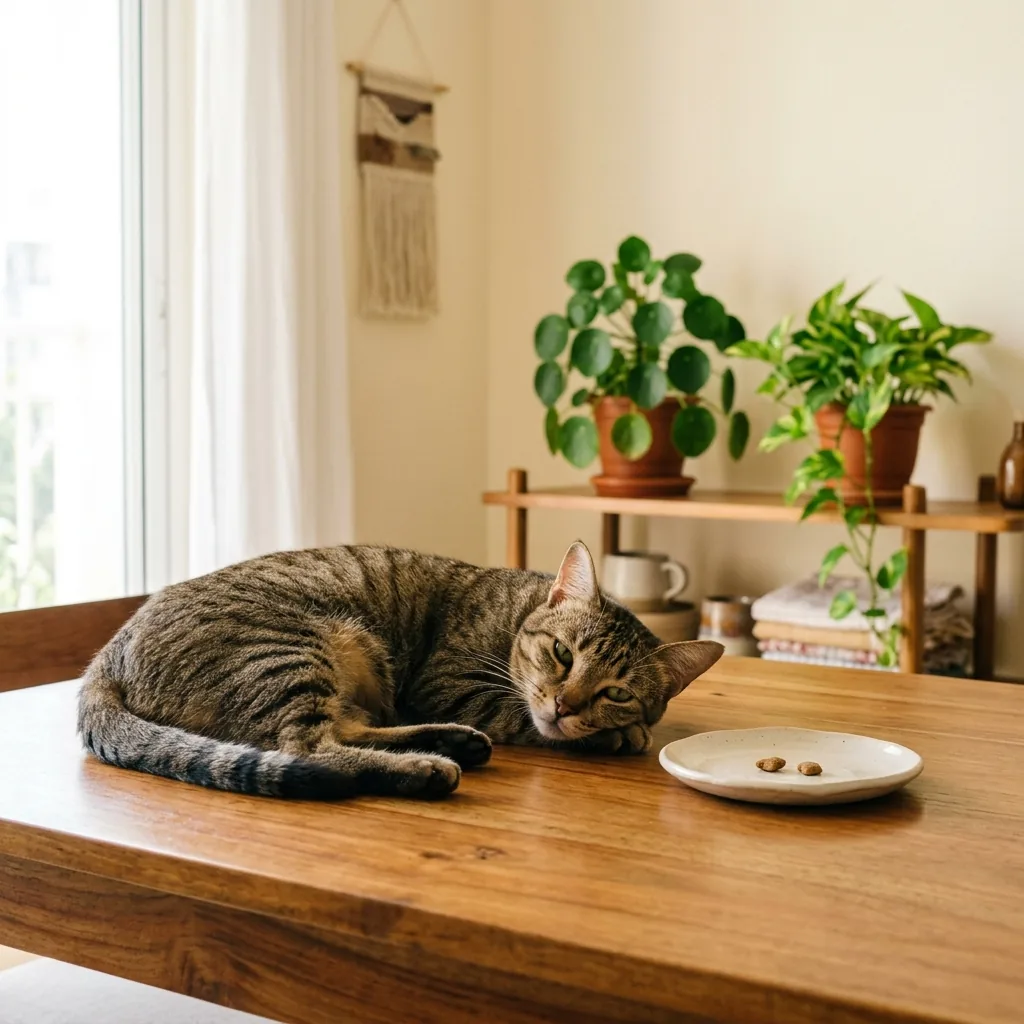
A tiny treat to a human is a full snack to a four-kilogram cat.
When treats exceed that 10 percent boundary, they do more than just add extra weight—they begin to replace essential nutrients from primary meals, leading to subtle dietary imbalances over time.
Five practical ways to manage treat calories
Keeping your cat trim and active does not mean stopping snack time entirely. It simply means adopting a few clever feeding habits around the home:
- Break treats into smaller pieces: Cats care far more about the act of receiving a reward than the actual size of the piece. You can easily snap a single crunchy biscuit into two or three mini bits.
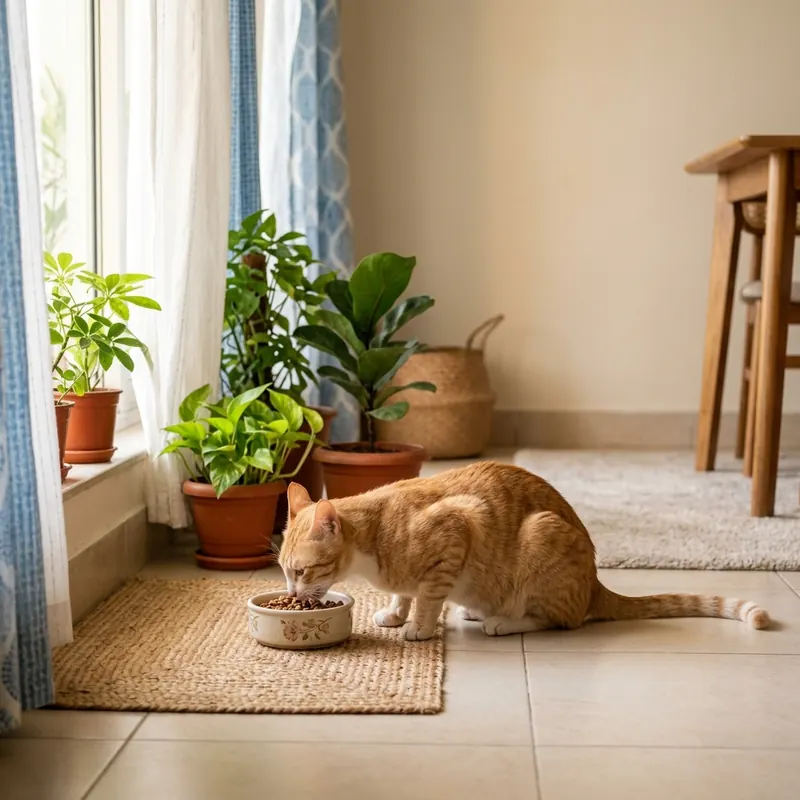
- Use daily kibble as rewards: Measure out your cat’s exact kibble ration for the morning, set aside a small handful in a glass jar, and use those individual kibble grains as treats throughout the day.
- Divide purée tubes over multiple days: You do not need to squeeze an entire lickable tube out at once. Squeeze a small dab onto a dish, recap the tube, and store it in the fridge for up to two days.
- Turn treat time into play: Instead of dropping a treat at your cat's feet, toss it across a tiled floor or hide it inside a puzzle toy so they burn energy hunting it down.
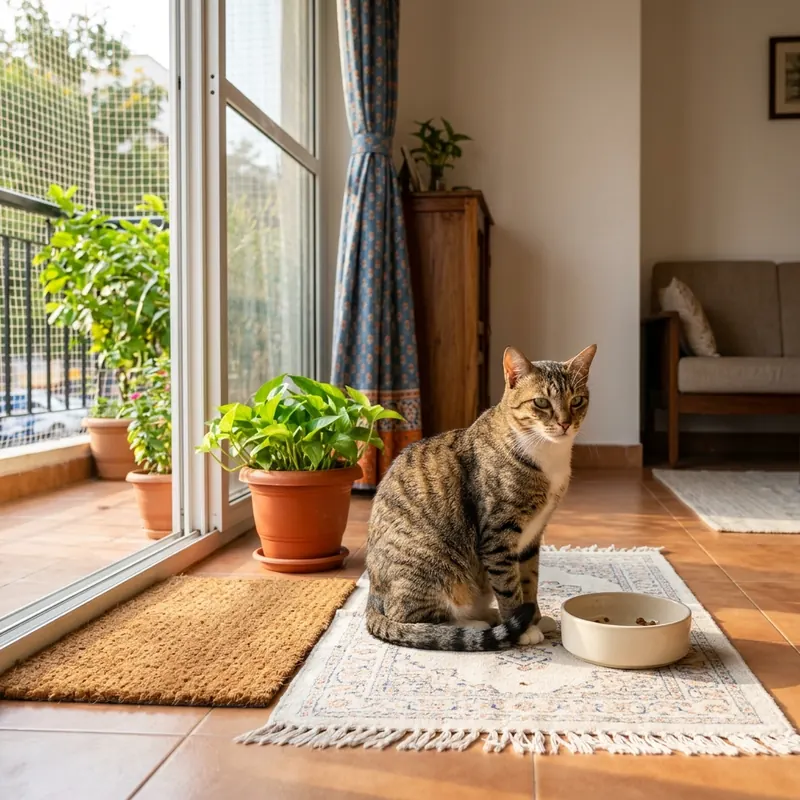
- Coordinate with family members: In busy households or joint families, two or three people often reward the cat separately. Keep a small dish for the day's treat allowance so everyone knows when the daily limit has been reached.
Checking your cat's body condition at home
If you suspect your cat might be carrying a little extra cushion, you do not need special equipment to perform a quick check at home. Stand directly above your cat while they are standing up and look down at their back; you should see a subtle waistline tucked in behind their ribcage.
Next, gently run your palms along their sides. You should be able to feel their ribs under a light layer of skin and fat without pressing hard—similar to feeling the knuckles on the back of your hand. If the ribs are buried under a soft layer or their waistline bulges outward, it is time to reassess their daily treat intake.
Never put a cat on a severe or sudden diet. Rapid weight reduction in felines can trigger serious health issues, including liver complications. If your cat needs to lose weight, consult your vet so they can calculate a safe target weight and help you adjust their main meals gradually and safely.
Managing treat calories is not about taking away your cat's pleasure—it is about keeping them nimble, energetic, and comfortable for years to come. A slow-blink of affection, a gentle chin scratch, or a game with a feather wand offers just as much joy as a bowl full of biscuits, with none of the heavy extra calories.